
Starting a personal training business is one thing. Scaling it is something else entirely.
Getting your first 10 clients takes hustle. Getting to 50 takes systems. Coaches who break through that ceiling are the ones who are smarter about how they structure, market and automate their business. If you’re feeling stuck trading time for money with no clear path to business growth, this guide is for you.
Here, we’re breaking down the key areas you need to get right if you want to scale your personal training business without burning out in the process.
Contents:
- 1. Understand what “scaling” actually means for a personal trainer
- 2. Nail your niche before you try to grow
- 3. Add online coaching to your service mix
- 4. Diversify your income streams
- 5. Automate your admin with the right software
- 6. Build a referral engine
- 7. Use group coaching to multiply your revenue per hour
- 8. Know your numbers
- 9. Hire and onboard additional trainers
- 10. Build automated lead generation systems
Understand what “scaling” actually means for a personal trainer

Scaling isn’t just getting more clients. It’s growing your revenue without proportionally growing your working hours. Most personal trainers hit a ceiling because their model is built around selling time, one session at a time. Once your diary’s full, you’re at your limit.
True scaling means finding ways to serve more people, generate more income, or both; without it depending entirely on how many hours you can physically work. That might look different depending on where you are in your business, but the principle is the same: build systems that work for you, not just with you.
Related article: How to create a personal training business plan
Nail your niche before you try to grow

Trying to scale a generic personal training business is like trying to fill a leaky bucket. Before you invest time and money into growth, make sure you’re crystal clear on who you serve and what problem you solve for them.
A well-defined niche makes everything easier: your marketing is sharper, your content resonates, and your referrals are more targeted. Whether you specialize in postpartum fitness, strength training for older adults, or corporate wellness, being known for something specific makes it far easier to attract the right clients consistently.
Generalist coaches compete on price. Specialists compete on value. That’s a very different business to run.
Related article: How to create a niche for your personal training business
Add online coaching to your service mix

One of the most effective ways to scale is to take your coaching online; even partially. Online training removes geographical limits and lets you work with clients who can’t or won’t come to you in person.
You don’t have to go fully virtual overnight. A hybrid model works well for many trainers: keep your in-person clients while building an online roster alongside them. You can deliver programming, check-ins, nutrition guidance and accountability digitally, without the need for face-to-face sessions every week.
The key to making online coaching work is having a proper delivery system, not just WhatsApp and spreadsheets. Your clients need a smooth experience; they should be able to access their programs, log workouts and message you without friction.
Related article: How to incorporate online PT programming into your training business
Diversify your income streams

The more income streams you have, the more resilient (and scalable) your business becomes. If every dollar you earn requires you to show up in person, you’re always one injury or illness away from a revenue crisis.
Here are a few income streams worth exploring as you grow:
Workout plans and programs:
Package your methodology into a downloadable training plan or 12-week program. Sell it at a lower price point to reach clients who can’t afford one-to-one coaching.
Group coaching:
Rather than training one client per hour, train five to ten. Group classes and small group coaching sessions dramatically increase your revenue per hour without proportionally increasing your time.
Digital products:
Ebooks, nutrition guides and video libraries are created once and sold indefinitely. They might not replace your core coaching income, but that income compounds over time.
Memberships or retainers:
Monthly membership models give you predictable, recurring income. Clients pay a set fee each month for a defined package of support; whether that’s check-ins, programming or app access.
Related article: 7 ideas for making more money as a personal trainer
Automate your admin with the right software
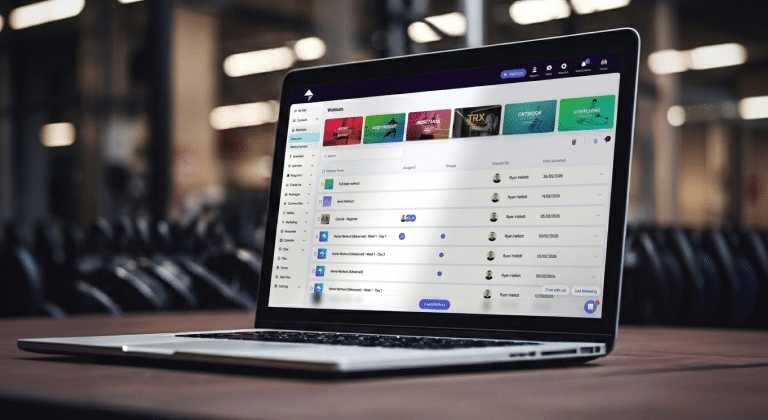
Admin is the thing that kills growth for most personal trainers. Chasing payments, writing programs from scratch, rescheduling sessions, sending check-in reminders; all of it eats into time you could be spending coaching, marketing or recovering.
The right personal training software takes a huge chunk of this off your plate. My PT Hub is built specifically for this. It brings together client management, workout programming, nutrition tracking, messaging,and payments into one platform; so you’re not juggling five different tools or drowning in spreadsheets.
With automated workflows in place, you can onboard new clients smoothly, deliver programs consistently, and keep clients engaged without it all depending on you manually doing everything. That’s what makes genuine scale possible; systems that run in the background while you coach.
The more clients you take on, the more critical this becomes. Trainers who try to scale on manual processes usually just end up more stressed, not more successful.
Related article: 5 things your personal trainer software should be doing for you
Build a referral engine

Word of mouth is still one of the most powerful client acquisition tools available to personal trainers. A satisfied client who recommends you to a friend is worth far more than any paid ad, and they’re significantly cheaper to acquire.
The problem is that most trainers leave referrals to chance. If you want referrals to become a reliable source of growth, you need to actively encourage them.
A simple referral incentive goes a long way. Offer your existing clients a free session, a discount or a month’s membership credit for every new client they bring in who signs up. You can also feature clients who refer others in your newsletter or social posts; people love recognition and it reinforces the behaviour.
The foundation of all of this is client results and experience. Clients refer trainers who get them results and make them feel valued. Focus relentlessly on both, and referrals follow naturally.
Related article: How to build a referral program for personal trainers
Use group coaching to multiply your revenue per hour

Group coaching is one of the most straightforward ways to scale your income without adding more hours. The maths are simple: if one client pays $60 for a session, that’s your return for that hour. If eight clients each pay $20 for a group session, you’ve made $160 for the same time investment.
Small group training also tends to have strong retention. Clients build friendships, accountability increases, and there’s a community feel that’s hard to replicate in solo sessions. People stick around longer when they feel part of something.
You don’t need a full gym to run group sessions. Many trainers run small group classes in local parks, community halls or hire out studio space on an hourly basis. Online group coaching through video calls is another option that scales even further (with no venue costs).
Related article: 10 small group training ideas for fitness coaches
Know your numbers: tracking performance
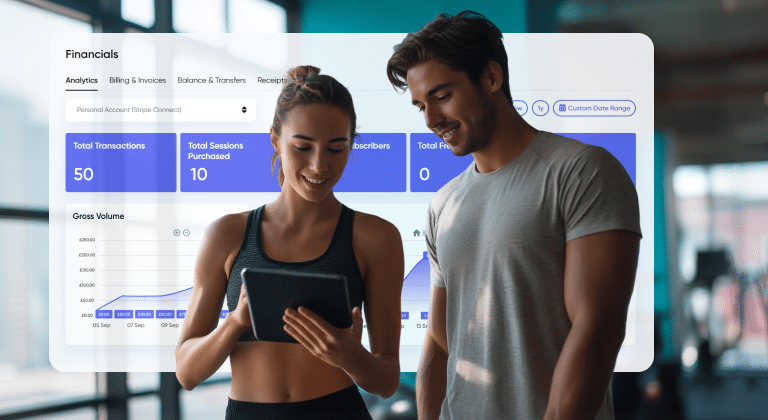
You can’t scale what you can’t measure. Many trainers grow their client numbers without ever checking whether the business is actually becoming more profitable. Revenue goes up, but so do expenses, cancelled sessions and unpaid invoices; and before long, working harder hasn’t translated into earning more.
Here are a few metrics worth tracking regularly:
Monthly recurring revenue (MRR):
How much predictable income are you bringing in each month, regardless of how many sessions you do?
Lifetime value (LTV):
How long does the average client stay, and how much do they spend over that time? Improving retention has a massive impact here.
Client acquisition cost (CAC):
How much does it cost you (in time or money) to acquire each new client? Compare this against LTV to understand whether your marketing is actually working.
Capacity vs. utilisation:
How many clients could you serve at full capacity, and how full are you right now? This tells you how much headroom you have before you need to change your model.
Understanding these numbers helps you make smarter decisions about where to invest your time and energy as you grow.
Related article: Personal trainer KPIs: Metrics you should track monthly
Hire and onboard additional trainers

There’s a ceiling to what you can build as a solo operator, and it’s lower than most trainers want to admit. If your goal is a genuinely scalable business rather than a busy freelance career, at some point you’ll need to bring other coaches on board.
This doesn’t mean hiring full-time staff from day one. Many trainers start by working with associate coaches on a contractor basis, bringing them in to cover sessions, run group classes, or take on clients you don’t have capacity for. You set the programming standards, they deliver the coaching and you earn a margin on their sessions.
Employees vs. contractors: what’s right for you?
The distinction matters legally and financially. Contractors offer flexibility; you pay per session or per client without the overhead of employment costs, benefits or payroll admin. Employees give you more control over how they coach and represent your brand, but they come with greater legal obligations.
Most personal training businesses start with contractors and move toward employment as they grow. Whichever route you take, be clear on the legal requirements in your country from the outset.
How to set up your team for success
The quality of your client experience shouldn’t drop when another coach steps in. That means having systems in place before you hire, not after. Document how you onboard clients, how programs are structured, how check-ins work and what the client communication standards look like. If it’s all in your head, it can’t be replicated.
My PT Hub supports team management directly within our platform. You can add additional trainers, assign them clients and maintain oversight of programming and progress without having to micromanage every session. That’s the kind of infrastructure that makes growing a team practical, not chaotic.
The coaches you bring in also reflect on your brand. Take the hiring process seriously; look for trainers who share your values, not just those who are available and qualified. A great hire can unlock real growth. A poor one can cost you clients.
Related article: 5 things your personal trainer software should be doing for you
Build automated lead generation systems

Referrals and word of mouth are great, but they’re not systems; they’re luck with good intentions behind them. If you want a steady pipeline of new clients flowing into your business without spending every spare hour on outreach, you need to build lead generation that works while you’re coaching.
Lead magnets that do the work for you
A lead magnet is something valuable you offer for free in exchange for someone’s contact details. For personal trainers, this might be a free 7-day meal plan, a home workout program, a quiz to help someone figure out their training style, or a short video series on a topic your ideal client cares about.
The lead magnet lives on your website or a simple landing page. Someone finds it through your social content, a Google search, or a recommendation; they enter their email, get the resource, and enter your marketing funnel. From there, a short automated email sequence builds trust, demonstrates your expertise and naturally introduces your paid coaching services.
Set it up once, and it keeps generating leads in the background indefinitely.
Content that attracts the right clients
Consistent content creation; whether that’s short-form video, Instagram posts, or a blog; builds what marketers call “owned” reach. Unlike paid ads, good content compounds over time. A YouTube video or blog post you publish today can still be bringing in leads two years from now.
The key is creating content that’s genuinely useful to your ideal client, not just content that appeals to other fitness professionals. Think about the questions your target audience is typing into Google or asking on Reddit. Answer those questions clearly and specifically, and you’ll attract people who are already looking for what you offer.
Paid advertising: when to use it
Organic content takes time to build momentum. Paid ads can accelerate the process; but they work best once you already know your niche, your offer, and your messaging. Running ads to a vague offer with no clear landing page is an expensive way to learn what doesn’t work.
When you’re ready, Meta ads (Facebook and Instagram) tend to work well for local personal trainers be cause of the granular audience targeting available. Google ads can also be effective if you’re targeting specific search terms. Start with a small budget, test your messaging, and only scale spend once you’re seeing a clear return.
Related article: Top lead generation strategies for personal trainers: The ultimate guide
In summary
Scaling a personal training business is absolutely achievable; but it requires you to think like a business owner, not just a coach. Get your niche right, diversify how you earn, automate your admin and build systems that don’t rely entirely on you being present for every interaction.
Ready to put the systems in place that make scaling possible? My PT Hub gives you everything you need to manage clients, deliver programs, take payments, and grow your business; all in one place. Start your 30-day free trial today and see what’s possible when your software works as hard as you do.