
Podcasting has become one of the most effective marketing channels for personal trainers and fitness coaches who want to build authority, reach a global audience and create scalable income streams. With over 584.1 million podcast listeners worldwide, a personal training podcast allows you to build authority, reach a global audience, and create scalable income streams beyond 1:1 coaching.
Whether your goal is lead generation, brand growth, or passive income, this step‑by‑step guide shows you how to start a personal training podcast, grow your audience, and monetize it effectively.
Contents:
- 1. Why personal trainers should start a podcast
- 2. How to plan your podcast concept and format
- 3. Essential equipment and technical setup
- 4. How to record and edit fitness podcast episodes
- 5. Monetization strategies for fitness podcasts
- 6. How to promote a fitness podcast
- 7. Measuring podcast success and growth
Why personal trainers should start a podcast
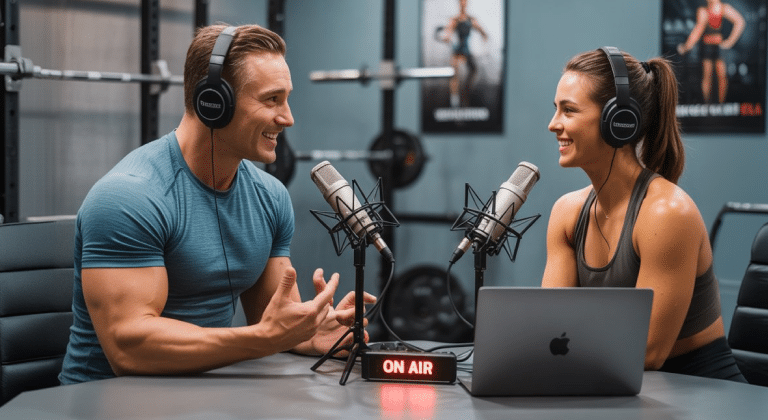
Starting a personal training podcast offers unique advantages that traditional marketing channels simply can’t match. Unlike social media posts that disappear in hours or written content that requires active reading time, podcasts integrate seamlessly into your listeners’ daily routines. People listen while commuting, working out, cooking or running errands, which means you’re literally in their ears during moments when they’re most receptive.
Podcasting is also one of the fastest ways to build authority and trust. Consistently explaining training principles, nutrition strategies and real client scenarios positions you as an expert far more effectively than ads or short‑form posts alone. This trust often leads to higher‑quality personal training leads and stronger client relationships.
From a scalability standpoint, podcasting removes geographical limits. While in-person training is constrained by time and location, a single podcast episode can reach thousands of listeners globally. This opens the door to online coaching, digital products and long-term brand growth.
Podcasting also expands your professional network. Interviewing other fitness professionals, health experts, or successful clients creates collaboration opportunities and exposes your brand to new audiences through cross-promotion.
Related article: Personal Training Marketing: How to Drive More Clients
How to plan your podcast concept and format
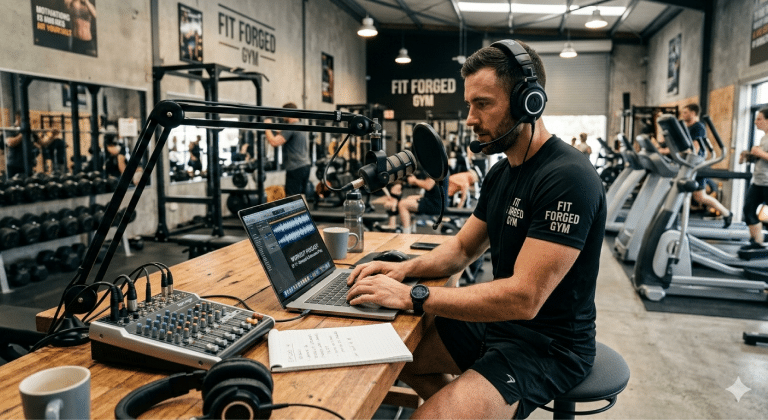
Before recording your first episode, you need a clear concept. The fitness podcast space is crowded, so defining a niche is essential.
Start by identifying who your podcast is for and what problem it solves. Instead of a generic fitness show, focus on a specific audience or angle. For example:
Training busy professionals with limited time
- Strength training for women over 40
- Coaching athletes in a specific sport
- Helping beginners build confidence in the gym
The more specific your niche, the easier it is to attract loyal listeners and position yourself as an expert. This concept of finding your personal training niche is crucial for both your podcast and overall business success.
Choose a podcast format
Select a format that matches your strengths and schedule:
Solo episodes:
Ideal for sharing tips, education, and opinions. Typically 15–30 minutes.Interview episodes:
Conversations with experts or clients. Usually 30–60 minutes.Q&A episodes:
Answer listener questions and address common challenges.Panel discussions:
Multiple guests discussing one topic (higher production effort but high engagement).
Consistency matters more than frequency. Weekly podcasts work well, but biweekly or monthly schedules are also effective if you stick to them. Reliable publishing builds listener trust and algorithm visibility.
Podcast equipment and technical setup for personal trainers
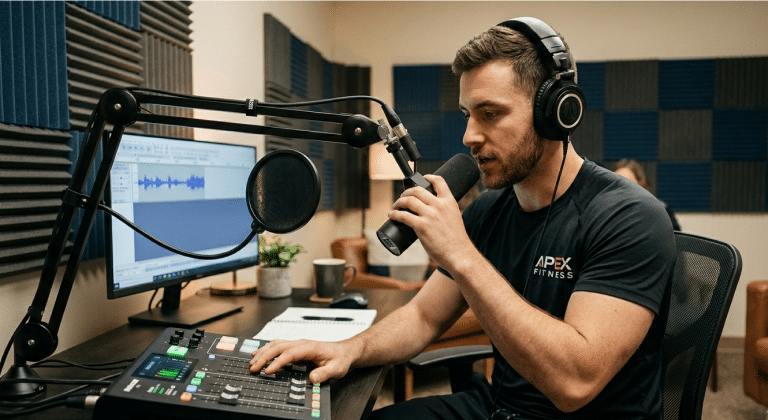
Audio quality plays a major role in podcast success. Listeners will forgive average content if audio is clear, but they won’t tolerate poor sound quality.
Essential podcast equipment
Microphone:
A USB microphone is ideal for beginners and delivers professional sound without extra equipment.Headphones:
Closed-back headphones help you monitor audio and prevent feedback.Recording software (in-person):
Free tools like Audacity or GarageBand work well. Paid tools like Adobe Audition offer advanced features.Recording software (remote):
Platforms like Zoom, Zencastr, or Riverside.fm are ideal for guest interviews and separate audio tracks.
Top tip: Always record a local backup in case of internet issues during remote interviews.
Choose a quiet recording space with minimal echo. Soft furnishings, carpets, curtains, or acoustic panels help absorb sound and improve clarity.
How to record and edit fitness podcast episodes
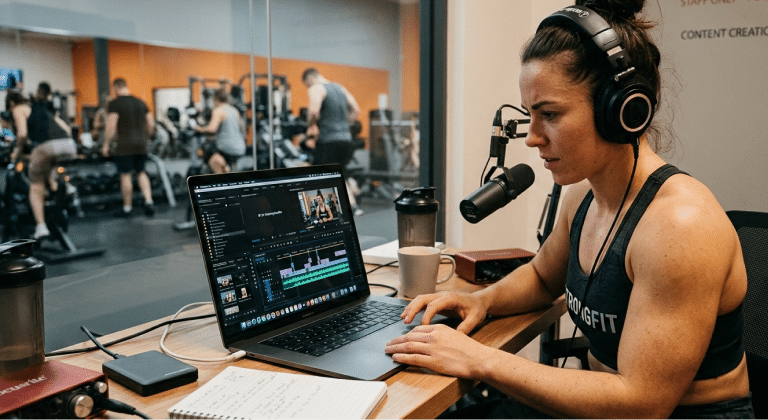
Preparation makes recording easier and more natural. Instead of scripting word-for-word, use a simple outline with key talking points, examples, and questions.
Start each episode with a clear introduction:
- Who you are
- What the episode is about
- Why it matters to the listener
Speak conversationally, as if you’re explaining something to a client during a session. Minor mistakes are normal, so pause and repeat rather than stopping the recording.
Podcast interview best practices
- Send questions in advance
- Start with easy warm-up questions
- Listen actively and allow natural conversation
Editing turns raw recordings into polished episodes. Remove long pauses, obvious mistakes, and distracting noise, but avoid over-editing. A natural flow keeps your podcast relatable.
Consider adding short intro and outro music (5–15 seconds) to create a professional feel. Export episodes as MP3 files (128 kbps or higher) and include episode metadata for podcast platforms.
Monetization strategies for fitness podcasts
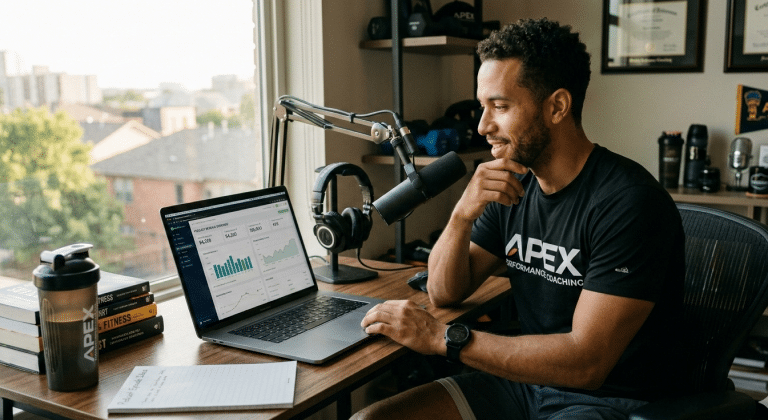
You don’t need millions of downloads to monetize a fitness podcast. Multiple revenue streams work best.
Sponsorships and advertising
Fitness brands and wellness companies pay to reach niche audiences. Rates typically range from $20–$100 CPM depending on engagement. Once you reach around 1,000 downloads per episode, start approaching brands you genuinely use and trust.
Affiliate marketing
Affiliate links allow you to earn commissions by recommending products or services. Fitness equipment, supplements, courses, and training software perform well when aligned with your audience’s needs.
Selling your own products and services
Your podcast is a powerful sales channel for:
- Online training programs
- Digital courses
- Ebooks and meal plans
- High-ticket coaching packages
Create products based on common listener questions. For example, repeated nutrition questions may justify a structured nutrition course.
Top tip: You can create and sell digital fitness products directly using personal training software like My PT Hub, making it easy to package programs and deliver them at scale.
Premium Content and Memberships
Offer bonus episodes, exclusive Q&As, or downloadable resources through paid memberships. Even a small percentage of paid subscribers can generate reliable monthly income.
How to promote a fitness podcast
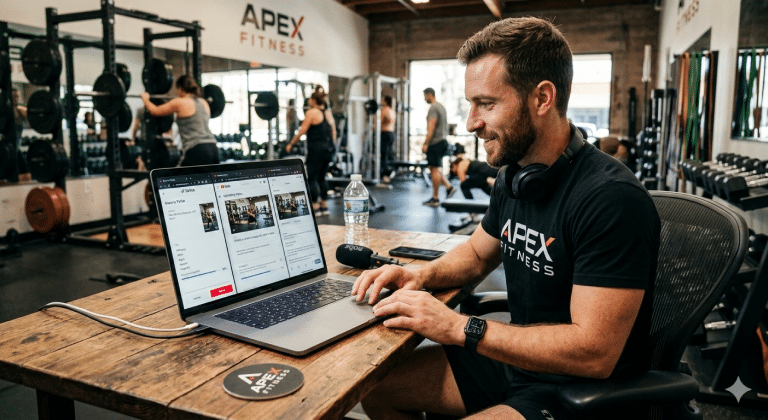
Great content only works if people hear it. Promotion should be ongoing and multi-channel.
Start with your existing audience: clients, email subscribers and social followers. Encourage them to subscribe, share episodes, and leave reviews.
Use social media creatively.
Share short clips, quotes, or audiograms instead of simple “new episode” posts. Platforms like Instagram, TikTok, and YouTube are especially effective for fitness content.
Email marketing
remains one of the highest-ROI channels. Send episode summaries highlighting clear takeaways and link directly to listening platforms.
Cross-promotion is powerful.
Guest on other fitness podcasts and invite hosts onto your show. This exposes your podcast to highly relevant new audiences.
Optimize podcast titles and descriptions
with keywords like personal training, fitness podcast, and your niche focus. Clear, descriptive titles perform better than vague or clever ones.
Measuring podcast success and growth

Track metrics that reflect real growth:
- Downloads per episode
- Listener retention
- Traffic sources
- Reviews and ratings
High retention shows your content delivers value. Review feedback to understand what topics resonate most and create more of that content.
Survey your audience occasionally to gather insights on challenges and interests. Use this feedback to refine topics, formats and monetization strategies.
Set realistic growth goals and focus on steady improvement rather than viral success. Podcasts grow through consistency, trust and long-term value.
Taking action on your podcast journey
Launching a personal training podcast is one of the most effective ways to build authority, attract clients, and diversify income in today’s digital fitness industry. Start simple, focus on delivering value and improve with every episode.
If you want to grow your fitness business while managing clients efficiently, tools like My PT Hub help streamline coaching, automate workflows, and free up time to focus on content creation and growth.
Start your 30-day free trial of My PT Hub today and see how the right tools can support your podcast, your clients and your long-term fitness business success.