
As a personal trainer, you know that clients who follow proper nutrition see faster results than those who don’t. Many trainers, however, feel uncertain about offering nutrition guidance due to legal restrictions or lack of knowledge.
This comprehensive guide covers everything you need to confidently add nutrition coaching to your personal training services. Whether you’re starting out or looking to refine your approach, you’ll find practical strategies to implement immediately.
Contents:
- 1. Understanding your scope of practice
- 2. Core nutrition fundamentals every trainer should know
- 3. How to assess your client’s current nutrition
- 4. How to create sustainable nutrition plans
- 5. How to track progress and adjust plans
- 6. Common nutrition coaching mistakes to avoid
- 7. The best tools and systems for nutrition coaching
- 8. How to grow your nutrition coaching business
Understanding your scope of practice

Before offering nutrition coaching, understand what you can legally do. While regulations vary, trainers generally cannot prescribe meal plans to treat medical conditions unless licensed as dietitians or nutritionists.
You can, however, provide general nutrition education, share healthy eating guidelines, suggest meal ideas and help clients develop better food habits.
In the US, for example, most states allow personal trainers to provide general nutrition guidance as long as you’re not diagnosing or treating diseases. If a client has diabetes, kidney disease, or other medical conditions requiring a therapeutic diet, refer them to a registered dietitian.
Always check local regulations and consider liability insurance. Positioning yourself as a “wellness coach” or “healthy eating coach” rather than a nutritionist is often safer if you lack formal credentials.
Core nutrition fundamentals every trainer should know

You don’t need a degree to help clients eat better, but foundational knowledge is key. Here are the core concepts that matter most:
-
Energy balance:
The relationship between calories consumed and calories burned. Weight loss requires a caloric deficit, weight gain requires a surplus, and maintenance requires balance. This is the foundation of all nutrition coaching. -
Macronutrients
(Protein, carbohydrates and fats) each play specific roles. Protein supports muscle repair and satiety, carbohydrates fuel workouts and daily activity, and fats support hormone production and nutrient absorption. A balanced approach typically works better than extreme restriction of any single macro. -
Micronutrients
(Vitamins and minerals) support overall health and performance. Rather than obsessing over individual nutrients, encourage clients to eat a variety of colorful whole foods. -
Hydration
Affects everything from performance to appetite regulation. A simple starting point is half an ounce per pound of body weight daily, adjusting for activity level and climate. -
Meal timing:
Matters less than most people think. Total daily intake trumps when you eat, though pre and post-workout nutrition can optimize performance and recovery for serious athletes.
How to assess your client’s current nutrition

The best nutrition plan is the one your client will actually follow. Forget perfect. Aim for practical and sustainable.
Start with a food journal for 3 to 7 days. Look for patterns such as meal skipping, processed foods, inadequate protein or emotional eating triggers.
Start with small, high-impact changes rather than overwhelming overhauls. For most clients, focusing on protein at each meal, increasing vegetable intake, and reducing liquid calories will deliver significant results without feeling restrictive.
Assess their nutrition knowledge and lifestyle constraints. A busy parent and a flexible professional will need different strategies. Understanding psychology is as important as tracking what they eat.
How to create sustainable nutrition plans

Focus on practical and sustainable changes:
-
Tier 1: habit-based coaching:
Introduce mindful eating, meal planning and portion awareness. Focus on behaviors like eating slowly, stopping at 80% full and planning meals ahead. This works brilliantly for beginners or those with diet fatigue. -
Tier 2: portion guidance:
Teach hand-sized portions (palm for protein, fist for vegetables, cupped hand for carbs, thumb for fats). No weighing or tracking required, but more structure than pure habit work. -
Tier 3: macro tracking:
Provide specific calorie and macronutrient targets with tracking apps. Reserve this for motivated clients with specific goals who won’t develop unhealthy relationships with tracking.
Flexibility is key; the 80/20 rule helps clients stay consistent without feeling restricted (i.e. if clients make good choices 80% of the time, the other 20% won’t derail their progress).
Consider creating a framework, not a prescription. Instead of “eat grilled chicken and broccoli every night,” teach principles like “include a palm-sized portion of lean protein and fill half your plate with vegetables.”
How to track progress and adjust plans

Monitor more than weight: body measurements, progress photos, performance, energy levels and clothing fit are important. Some clients lose inches while the scale barely moves, especially when building muscle simultaneously.
Check in regularly but not obsessively. Weekly or biweekly assessments work for most clients. Daily weigh-ins can drive people crazy and don’t account for normal fluctuations from water retention, digestion, and hormones.
When progress stalls, resist the urge to immediately slash calories further. First, verify compliance. Are they actually following the plan? Tracking accurately? Being honest about portions and weekend eating?
If compliance is solid but progress has stopped, make small adjustments (10-15% change) rather than dramatic cuts. Patience beats panic. Sometimes plateaus simply require consistency over time.
Watch for signs that the approach isn’t working: excessive hunger, fatigue, poor workout performance, obsessive thoughts about food or binge episodes. These signal the need to adjust your strategy, not push harder.
Top tip: My PT Hub offers the coaches the ability to create meal plans, track intake and store and compare progress photos, making it easy for coaches to fast-track their client results.
Common nutrition coaching mistakes to avoid
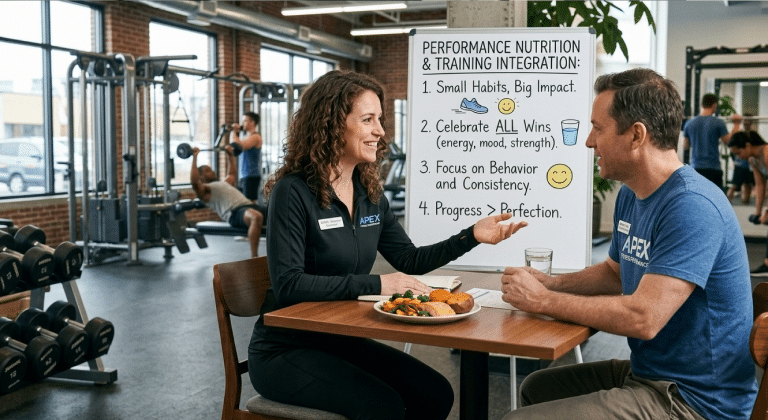
Even experienced trainers fall into these traps. Learn from others’ mistakes rather than making them yourself.
-
Overcomplicating things:
Clients don’t need to know about circadian fasting windows or the glycemic index of purple sweet potatoes versus orange ones. Stick to fundamentals that move the needle. -
Ignoring behavior change psychology:
Knowing what to do and actually doing it are completely different challenges. If you’re only addressing the “what” without helping with the “how,” you’re missing half the equation. -
Copying your own diet:
What works for you as a fitness professional might be completely unrealistic for someone working 50 hours a week with three kids. Personalization matters. -
Making it all-or-nothing:
Perfectionism kills progress. Clients need permission to be imperfect while still moving forward. A B-minus effort sustained over time beats an A+ effort that burns out in three weeks. -
Neglecting the social aspect of eating:
Food is cultural, emotional, and social. Plans that require clients to avoid all restaurants and social events will fail. Build in strategies for real-life situations. -
Focusing solely on aesthetics:
While many clients come to you wanting to “look better,” connecting nutrition to how they feel, perform and function creates deeper motivation than appearance alone. -
Not referring out when needed:
Know your limits. Disordered eating patterns, medical conditions, and complex situations require specialists. Building relationships with registered dietitians for referrals serves your clients better than trying to handle everything yourself.
Tools and systems for nutrition coaching
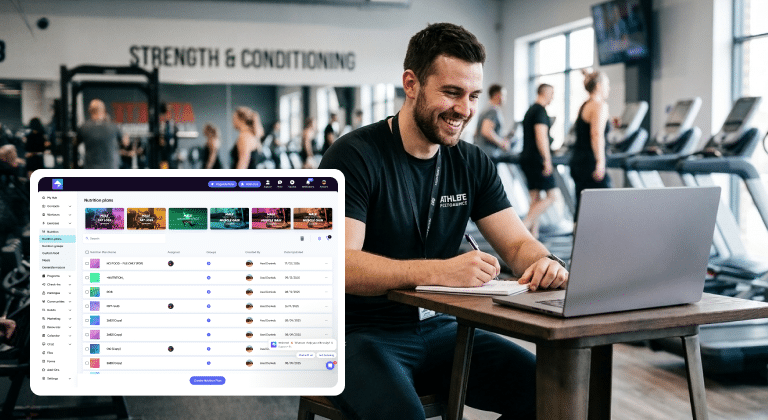
The right tools make nutrition coaching scalable and sustainable, both for you and your clients.
Food tracking apps
like My PT Hub or MyFitnessPal help clients who benefit from data and accountability. Some people thrive with tracking while others develop unhealthy relationships with it. Know your audience.
Meal planning resources
save you from recreating the wheel weekly. Create a library of go-to meals and recipes that align with different goals and preferences. Templates for meal prep make clients’ lives easier.
Client management software
centralizes everything in one place. Instead of scattered information across texts, emails, and spreadsheets, comprehensive platforms like My PT Hub let you store meal plans, track check-ins, share resources and communicate efficiently.
Education libraries
allow you to share information without repeating yourself constantly. Create documents, videos or guides covering common topics like reading nutrition labels, dining out strategies, or meal prep basics
Progress tracking systems
beyond the scale help clients see the full picture. Whether it’s a simple spreadsheet or built-in features in your coaching platform, consistent tracking reveals patterns and keeps clients engaged.
Automation and client management features
handle routine tasks so you can focus on actual coaching. Automated check-ins, onboarding sequences for new nutrition clients and recurring meal plan delivery save hours each week.
Look for solutions that integrate nutrition and training in a single platform. Managing separate systems for workouts and meal plans creates unnecessary friction for both you and your clients.
Growing your nutrition coaching business

Adding nutrition coaching shouldn’t feel like doubling your workload. Done right, it enhances your existing services and increases client results.
Start with current clients
who are already getting results from training but would benefit from nutrition support. They already trust you, which makes it an easier conversation than starting with strangers.
Create tiered packages
that reflect different levels of nutrition support. Basic packages might include general guidelines and monthly check-ins, while premium packages offer detailed meal plans and weekly accountability.
Bundle strategically
rather than separating training and nutrition completely. Many clients want comprehensive solutions. A package combining both services at a slight discount beats selling them separately.
Educate your market
about why nutrition matters for their goals. Content marketing through social media, blogs or emails positions you as the expert who can help, not just another trainer.
Collect and share results
from clients who’ve transformed through your nutrition coaching. Testimonials and before-after stories (with permission) are powerful marketing tools.
Related article: How to use client reviews / testimonials / case studies ethically to build credibility and attract new clients
Consider group programs
for nutrition coaching. While training often requires individual attention, nutrition education and accountability work brilliantly in group settings. This increases revenue per hour while decreasing client costs.
Invest in ongoing education
to stay current and build confidence. Short courses, certifications, or mentorship from experienced nutrition coaches make you better at this crucial skill.
Set boundaries early
about communication and response times. Nutrition coaching can become all-consuming if clients expect instant responses to every food question. Establish check-in schedules and typical response windows.
Transform your training business with nutrition coaching
Nutrition coaching is a powerful addition to personal training. Combining effective exercise programming with nutrition guidance creates complete client solutions.
My PT Hub provides trainers with all the tools needed for professional nutrition coaching, including meal planning, macro tracking, client communication and progress monitoring in one platform.
Start your 30-day free trial today to scale your nutrition services efficiently and profitably.