
Social media marketing for personal trainers has never been more important. With billions of people scrolling their feeds daily, the right strategy can put your fitness business in front of thousands of potential clients, without spending a penny on advertising.
For personal trainers, a strong social media presence does three things: it builds brand awareness, attracts new clients, and establishes the kind of credibility that makes people want to work with you. The challenge is knowing where to start and what to actually post. This guide covers everything, from choosing the right platforms to creating content that converts followers into paying clients.
Social media marketing for personal trainers: your complete strategy guide
1. Start with a clear strategy
Before you post a single thing, get clear on what you want social media to do for your business. Are you trying to attract local clients? Build an online coaching audience? Establish yourself as a niche specialist? Set specific, measurable goals, for example “gain 200 new followers in 90 days” or “generate five new enquiries per month through Instagram,” and use those goals to shape every content decision you make.
Once you know what success looks like, you can build a content plan that works toward it. That’s where a social media content calendar comes in, helping you stay consistent without burning out.
2. Choose the right social media platform
Now it’s time to actually start building your social media presence. Not sure what platforms you should look at? No worries, read on and see our list of the best social media for you to start on.
Instagram: expand your reach with visual content
Instagram is a great starting point, especially for personal trainers. It has around 2 billion active monthly users across a wide range of ages and demographics, making it one of the most versatile platforms for fitness professionals. It offers the ability to post photos, videos (Reels and Stories) and with Threads, you have access to a written post platform as well. It’s a great first social media platform to get used to posting and using all the tips we’ll give you to build your presence. It is also beneficial to expand your fitness brand across other platforms to reach a broader audience, once you have the hang of Instagram.
Related article How to start a fitness Instagram
Once you’ve built authority on Instagram, expanding to other platforms becomes much easier. A portion of your audience will already follow you there, giving you an instant head start wherever you go next. A social media strategy for a fitness business does not change majorly between platforms; it’s the content itself that changes. If you have multiple platforms, switching the content up between each social media platform is also going to build your credibility and push people into buying into your brand.
TikTok: Creative, short-form content for viral impact
TikTok excels at short, creative videos that can quickly reach a wide audience. Although many videos may not go viral, the platform encourages versatility and creativity in content creation. With TikTok’s playlist feature, people can easily find the content that resonates with them, whether that’s flexibility work, home workouts or nutrition tips.
With almost 70% of TikTok users aged 18-34, it’s the ideal platform for coaches targeting a younger demographic. It rewards playful, innovative content, so don’t be afraid to try trending formats or sounds. When thinking about starting a fitness TikTok, consider pairing it with Instagram to reinforce your message across multiple platforms.
Facebook: Connecting with communities and running local ads
Facebook is a valuable tool for connecting with local communities and running targeted ads. It may not drive the highest organic engagement, but its Groups feature is one of the most powerful community-building tools available to personal trainers. With 35% of its users aged 35-54, Facebook also gives you access to a slightly older demographic than Instagram or TikTok, which is worth factoring into your content tone and messaging.
Facebook Ads are also worth considering as your business grows. The platform’s targeting options let you reach people by location, age, interests, and fitness goals, making it one of the most cost-effective paid channels for local personal trainers.
Related article: How to get more personal training clients on Facebook
YouTube: Educational videos and long-form tutorials
YouTube is the ideal platform for long-form content, like in-depth tutorials and educational videos. It complements platforms like Instagram and TikTok by offering space to expand on shorter content, such as creating full-length workouts or detailed fitness guides, but also offers the opportunity to post short-form videos through the Shorts feature. If you’re considering starting a YouTube fitness channel, repurpose or expand existing content for a strong launch.
LinkedIn: Establishing authority and networking with industry professionals
LinkedIn is ideal for networking with other professionals and showcasing your expertise. It’s less about marketing your services directly and more about sharing insights, research, or theoretical perspectives to build credibility and establish yourself as a thought leader. For example, if you have unique views on anatomy or trends in fitness, LinkedIn is a great place to spark meaningful conversations and collaborations. It will help cement yourself as an expert in your field, showcasing theoretical skills that will make you a more valuable personal trainer. If your fitness business is centered around corporate wellness or targets high-end professional clients, an active LinkedIn profile is a great way for you to get in front of your ICP (Ideal Customer Profile).

3. Create engaging content
Creating engaging fitness content for social media is all about providing value while keeping it authentic and visually captivating. Your audience craves content that educates and inspires, so share workout tips, fitness hacks, and motivational client stories that resonate with their needs. High-quality visuals—think crisp videos and eye-catching infographics—are essential to grab attention and make your posts stand out. Don’t forget to sprinkle in your personality! Sharing behind-the-scenes moments or your unique fitness philosophy builds trust and relatability.
Variety is key to keeping your followers hooked. Mix up your content with tutorials, quick fitness challenges, or live sessions to keep things fresh and exciting. Engage your audience directly by using interactive features like polls, Q&A sessions, and comments to create meaningful conversations with your followers. To expand your reach, leverage relevant hashtags, geotags, and trending topics to make your posts more discoverable.
A useful content mix to aim for: roughly 60% educational content (workout tips, nutrition advice, myth-busting), 30% engagement content (client wins, behind-the-scenes, Q&As), and 10% promotional content (your services, calls to book). This keeps your feed valuable and prevents you from coming across as overly salesy.
Related article: Personal trainer hashtags to grow your social media
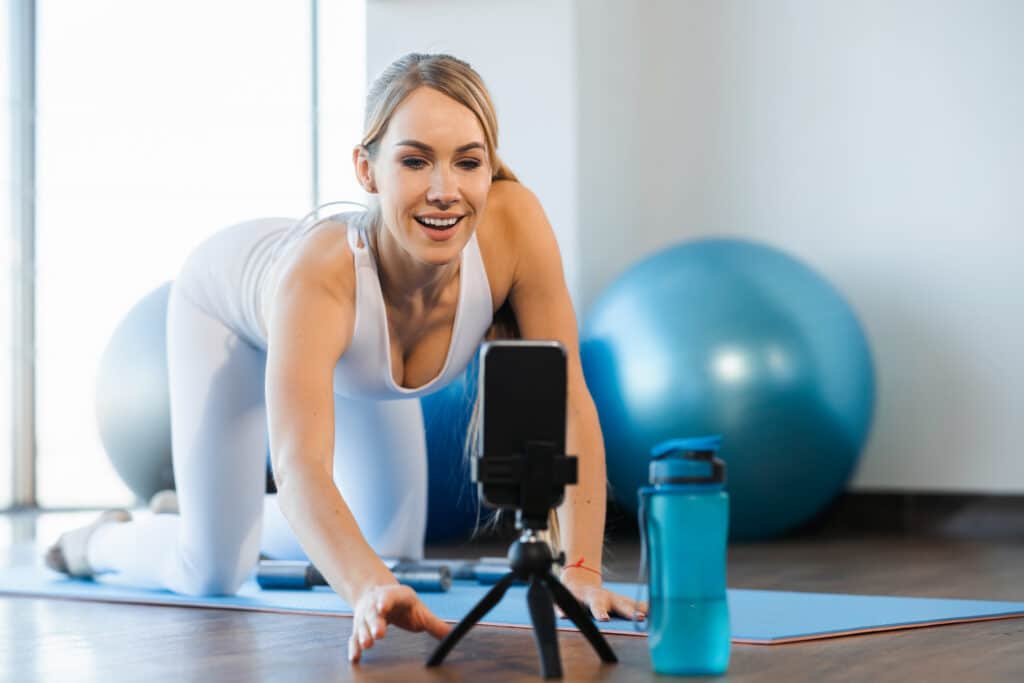
4. Build a strong brand identity
When it comes to building your fitness brand on social media, having a clear, strategic plan is the secret sauce for success. Start by identifying your audience and crafting content that speaks directly to their fitness goals and challenges—whether it’s beginner-friendly workout routines, advanced fitness hacks, or motivational success stories. When you know your market, start crafting your brand identity – how you want to be seen on your socials. This will often be your potential client’s first impression of you, so make sure that it counts! Try to make your content and profile visually appealing with top-notch videos and graphics, and grab attention instantly.
Next, embrace authenticity. This will be key to creating a likeable and popular brand identity. Your profile is often a potential client’s first impression of you, so make it count. Stay consistent with your posting schedule; reliability builds trust and keeps your followers excited to see what’s next.
One smart approach: repurpose content across platforms. A workout video filmed for Instagram Reels can be posted on TikTok, trimmed for YouTube Shorts and expanded into a full tutorial for YouTube. This lets you maintain a presence on multiple platforms without creating everything from scratch.

6. Track your results and refine
Posting consistently is only half the equation. The other half is understanding what’s working. Every major platform (Instagram, TikTok, Facebook, YouTube) offers built-in analytics showing you which posts get the most reach, engagement, saves, and profile visits. Use this data to double down on what resonates and cut what doesn’t.
Key metrics to track: follower growth, engagement rate (likes, comments, shares), reach per post, and profile link clicks. Over time, these numbers will tell you exactly what your audience wants to see.
6. Build a strong community and always re-engage
Building a thriving online community starts with meaningful connections. Authenticity is at the core—show your audience the real you through behind-the-scenes content, personal stories, and relatable moments. People connect with genuine experiences, so let your personality shine in your posts and interactions.
Engagement is another key element. Features like polls, Q&A sessions, and direct responses to comments help create a dialogue with your followers, making them feel heard and valued. Additionally, a consistent presence reassures your audience that you’re committed to fostering a supportive environment. By combining authenticity, interaction, and reliability, you’ll cultivate a loyal community that sees you not just as a trainer but as a trusted partner in their fitness journey.
It’s also worth thinking about converting your social audience into an email list. Offering a free resource, such as a sample workout plan or nutrition guide, in exchange for an email sign-up is a powerful way to move followers off social media and into a channel you own and control.
Related article: Personal training email templates: 10 ready-to-use examples
Social media content ideas for personal trainers
Struggling to know what to post? Here are some of the best-performing content formats for personal trainers on social media.
1. Use client testimonials
When you’re feeling stuck for ideas, look no further than your own clients. Showcasing your clients’ fitness journeys, achievements, and transformations is one of the most powerful ways to create authentic, engaging content. Real-life success stories act as strong social proof, helping potential clients trust in your ability and buy into your brand. Start by highlighting milestones—whether it’s a client’s first pull-up, a major weight loss achievement, or simply their commitment to a healthier lifestyle. These stories resonate deeply because they are relatable, inspiring, and showcase your skills as a trainer in a natural, non-salesy way. Make sure you have your client’s permission first, and involve them in the process—many will feel proud to share their success.
2. Exercise demonstrations & technique
Filming and sharing short, instructional workout videos is one of the best ways to add value to your followers. Focus on clear demonstrations that highlight proper form, modifications for different fitness levels, and simple progressions. Think about workouts your audience can try at home or in the gym. By consistently offering useful, easy-to-follow workout demos, you’ll quickly establish yourself as a go-to fitness expert.
3. Educational content
Social media is a brilliant platform for educating your audience. Share helpful tips on training techniques, nutrition advice, recovery strategies, and ways to prevent injury. You can also debunk common fitness myths or explain the science behind why certain methods work. Educational content positions you as a reliable, knowledgeable source, helping to build authority and trust, without having to resort to the hard sell.
4. Collaborations and partnerships
Teaming up with complementary professionals, such as dietitians, physiotherapists, or local fitness brands, is a great way to reach a new audience and add credibility to your brand. Even a simple Instagram Story takeover or a joint live session can expose your profile to hundreds of new potential clients. Look for collaborators who share your values and whose audience overlaps with your ideal client.
5. Basic workouts and taster content
These can act as a precursor to what you might offer, a trailer for your main personal training service. If people like your style of training on social media, they might sign up for your programs. This is also a great way of introducing new people to fitness, especially if someone has never done a higher-intensity workout or program before.
Remember, potential clients are more likely to trust a trainer who can demonstrate real-world results rather than just talk about them. Let your current clients be your best advocates and your greatest source of inspiration when creating content.

Next steps: converting your followers into paying clients
Once you’ve built up your social following, wouldn’t it be great to convert your followers into paying clients? That’s where My PT Hub comes in! With our all-in-one personal training software and app, you can easily connect your app with your social profiles to onboard new clients, deliver online content and introduce them to free taster programs or paid packages.
Want to learn more about how we help over 130,000 fitness professionals to successfully simplify, streamline and scale their fitness businesses?
Sign up to your 30-day free trial of My PT Hub today!
Social media for fitness professionals FAQs
How often should personal trainers post on social media?
Consistency matters more than frequency. Most trainers find that posting 3-5 times per week is sustainable and effective. Start with what you can maintain reliably, then scale up as you get more comfortable creating content. Check your platform analytics to find out when your audience is most active, and aim to post during those windows.
How long does it take to grow a personal training business on social media?
Building a successful social media presence takes time and consistency. While targeted ads or trending content can deliver faster results, it generally takes several months of regular posting and audience engagement to establish trust and grow your following. Stay consistent, provide value, and focus on connecting with your audience to achieve sustainable growth.
What common mistakes should personal trainers avoid on social media?
Focusing too much on selling: instead of pushing constant promotions, share content that educates, inspires, and engages your audience. Ignoring interactions: not replying to comments or DMs can make you seem disconnected, and active engagement fosters trust and loyalty. Inconsistent posting: gaps in your schedule reduce visibility and make it harder to build a dedicated following. Skipping analytics: if you’re not checking what’s working, you’re flying blind. Review your performance monthly and adjust your content accordingly.
Which social media platforms work best for personal trainers?
Instagram and TikTok are great for showcasing workouts, fitness tips, and client transformations through short-form and visually engaging content. Facebook is useful for connecting with local communities and running targeted ads. YouTube is ideal for sharing long-form educational videos to establish your expertise. LinkedIn is perfect for networking with other professionals and showcasing your knowledge in areas like fitness trends or anatomy.