
There are a lot of fitness coaches online. Type “personal trainer” into Instagram and you’ll find thousands of accounts posting workout clips, transformation photos and motivational captions. So why do some coaches attract clients consistently while others post into the void? The answer, more often than not, comes down to personal brand. Not just a logo and a color palette, but a clear, recognizable identity that tells potential clients exactly who you are, who you help, and why they should choose you over the next fitness coach in their feed.
Building a personal brand isn’t about becoming an influencer. It’s about becoming known and trusted by the right people. This guide walks you through how to do exactly that, step by step.
Contents:
- 1. Understand what a personal brand actually is
- 2. Start with your niche and ideal client
- 3. Define your brand positioning
- 4. Develop your visual identity
- 5. Find and commit to your brand voice
- 6. Build a content strategy that works for your business
- 7. Your website: the brand asset most coaches overlook
- 8. The client experience is part of your brand
- 9. Use social proof strategically
- 10. Stay consistent (this is where most coaches lose momentum)
Understanding what a personal brand actually is for a fitness coach

A personal brand is the sum of what people think and feel when they come across your name or your content. It’s not just a logo. It’s the impression you leave. It’s whether a potential client scrolling past your post stops to read it or keeps scrolling.
For fitness coaches, a personal brand is built across every touchpoint: your social media content, how you write emails, how your sessions are structured, the way you respond to a DM, and even the professionalism of your booking process. Get those things aligned and consistent, and you have a brand. Let them contradict each other, and you have noise.
The good news is you don’t need a big budget or a marketing agency to get started. You need clarity, consistency and patience.
Start with your niche and ideal client

Before you design a single graphic or write a single bio, you need to know who your brand is for. This is the step most coaches rush past, and it makes everything else harder.
Your niche isn’t just the type of training you deliver. It’s the intersection of what you’re great at, what you enjoy and what a specific group of people genuinely need. A niche could be strength training for women over 40, fat loss coaching for shift workers, or movement and mobility for desk-bound professionals. The more specific, the more your brand can speak directly to that person.
Here’s a practical exercise: write a one-sentence description of the person you most want to help. Include who they are, what they’re struggling with, and what outcome they’re looking for. That sentence should inform every branding decision you make from here.
Related article: How to create a niche for your personal training business
Define your brand positioning as a fitness coach

Brand positioning is the answer to one question: why you, and not someone else?
This isn’t about putting down other coaches. It’s about being clear on the specific value you offer and how that’s different from the sea of generic “get fit, feel great” messaging out there. Your positioning should reflect your method, your values, your communication style, or the specific results you help clients achieve.
A useful framework is the “I help [who] achieve [what] through [how]” formula. For example: “I help new mums rebuild their strength and confidence through progressive, home-friendly training programs that fit around nap schedules.” That’s specific. That’s positioning. That’s going to resonate with exactly the right person.
Write this statement out, put it somewhere visible and check every piece of content you create against it. If a post doesn’t connect back to that statement, it probably doesn’t belong on your feed.
Develop your visual identity
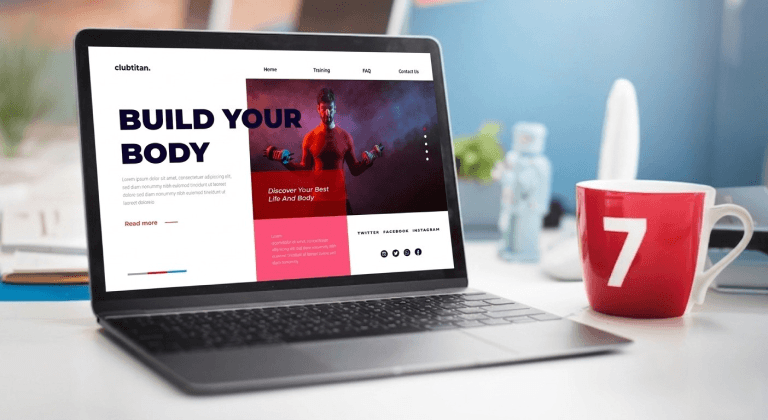
Now you can think about the visual stuff. Your visual identity includes your logo, color palette, typography, and the overall aesthetic of your content. It’s the part of branding most people start with, but it’s far more effective when it’s built on the foundation of your niche and positioning.
A few principles to follow:
Keep it simple.
A clean, minimal design tends to age better and translate across more platforms than something overly complicated. If your logo doesn’t work in black and white, at a small size, or on both a dark and light background, simplify it.
Be consistent.
Use the same two or three colors across everything: your social media posts, your website, your client-facing documents, your coaching app. Consistency builds recognition over time; recognition builds trust.
Match your aesthetic to your audience.
A brand targeting high-performance athletes might lean into bold blacks, sharp lines, and high-contrast imagery. A brand targeting beginners or stress-recovery clients might use warmer tones and softer design. Neither is wrong; both should be intentional.
Related article: Fitness logos: The ultimate guide to design, tools & examples
Find and commit to your brand voice
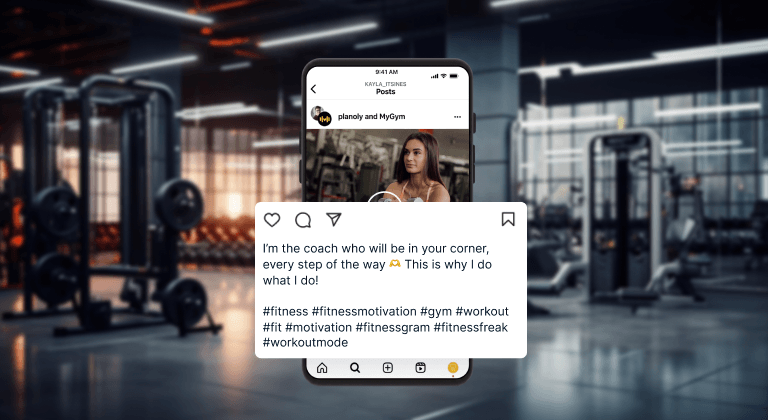
Your brand voice is how you write and speak. It covers your tone, your vocabulary, your level of formality, and the personality that comes through in everything from your Instagram captions to your client check-in messages.
A few questions to help you define yours: Are you direct and no-nonsense, or warm and nurturing? Do you use humor, or keep things professional? Do you lean on science and data, or lead with emotional storytelling? There’s no right answer; the right answer is the one that’s authentic to you and resonates with the clients you want to attract.
Once you’ve got a sense of your voice, write it down. Literally create a short brand voice guide: two or three adjectives that describe your tone, a couple of phrases you’d use and a couple you wouldn’t. This sounds overly formal for a solo coaching business, but having it written down makes it much easier to stay consistent, especially when you’re producing content at volume.
Top tip: read your captions out loud before you post. If they don’t sound like you having a conversation, rewrite them.
Build a content strategy that works for your fitness coaching business

Content is how most coaches grow their brand online, and it’s where a lot of overthinking happens. The goal isn’t to post constantly; it’s to post with purpose.
A simple content strategy for a fitness coach might look like this: three to four posts per week across one or two platforms, each fitting into one of three categories.
Educational content:
Tips, explanations, myth-busting and how-to guidance that demonstrates your expertise and gives your audience genuine value. This is the content that earns trust.
Social proof content:
Client results, testimonials, progress updates (with permission) and case studies that show your coaching actually works. This is the content that earns credibility.
Personality content:
Behind-the-scenes glimpses, your thoughts on training, your professional journey, opinions on fitness culture. This is the content that earns connection.
Balancing all three keeps your feed from becoming either a sales pitch or a Wikipedia article. Aim for roughly half educational, a quarter social proof, and a quarter personality.
Related article: Social media content calendar template: the complete guide for personal trainers
Your website: the brand asset most fitness coaches overlook
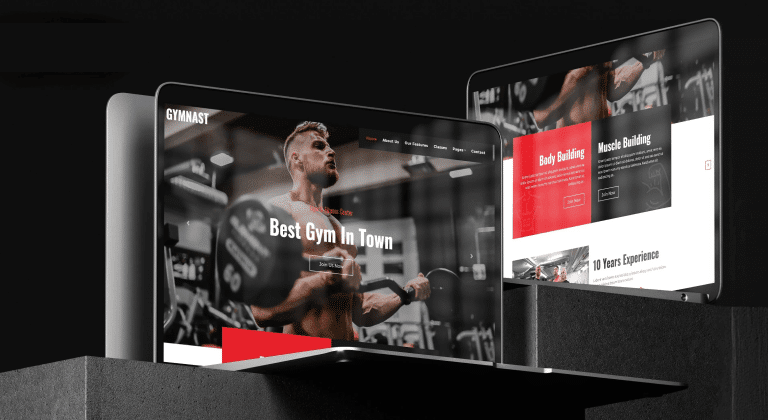
Social media is rented land. Algorithms change, platforms rise and fall, and your account can be restricted or suspended without warning. Your website, on the other hand, is yours. It’s the one place online where you have complete control over how your brand is presented.
A strong personal trainer website doesn’t need to be elaborate. It needs to clearly communicate who you are, who you help, what you offer, and how to get in touch or get started. It should feature a professional photo, a clear description of your services, and a handful of genuine client testimonials. Everything else is secondary.
Make sure your website is consistent with the rest of your brand: same colors, same voice, same overall feel. A visitor who finds you on Instagram and then visits your website should feel like they’ve arrived at the same place, not a different business.
Related article: How to get started building your personal trainer website
The client experience is part of your brand

Here’s one that barely gets mentioned in most branding guides: the experience your existing clients have is a core part of your brand. If your content looks polished but your onboarding is chaotic, your session communication is inconsistent, or your clients feel like they’re being forgotten between sessions, that’s a brand problem.
Every touchpoint matters. That includes how quickly you reply to messages, how professional your programs look, how smoothly the payment and booking process runs and how well you celebrate client progress. These things shape how clients talk about you to their friends, which is ultimately your most powerful marketing channel.
Top tip: A platform like My PT Hub can help you tighten up the operational side of your business, from a fully white labelled app and automated check-ins to client progress tracking and streamlined communications. When your back end runs well, your brand looks more professional from every angle.
Use social proof strategically
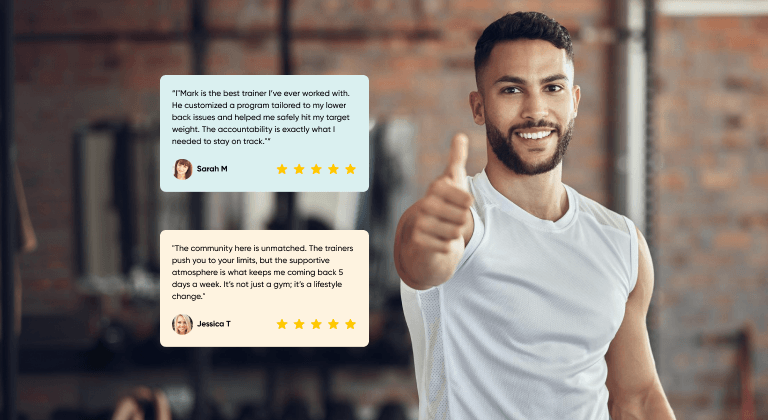
Testimonials, client results and case studies are among the most convincing brand-building tools available to fitness coaches. They do something your own content can’t: they let someone else tell your story.
Collect feedback from clients regularly, not just at the end of a program. A mid-program check-in often yields more honest, nuanced feedback than an end-of-program review, and it gives you quotes that speak to the process of working with you, not just the outcome.
When you share client results, go beyond the before-and-after photo whenever you can. A few sentences about how a client felt, what changed for them, or what they were struggling with before they started working with you tells a far more compelling story than a side-by-side picture. That said, always get explicit written permission before sharing any client content publicly.
Related article: Personal training brand storytelling: Why narrative matters for client attraction
Stay consistent (this is where most fitness coaches lose momentum)

Building a personal brand is a long game. Most coaches put in significant effort for a few weeks, see modest results and scale back. The coaches who build recognizable, trusted brands are the ones who keep going when it feels like nothing is working.
Consistency means showing up regularly with content, even when engagement is low. It means using the same colors and tone across every platform, every month. It means delivering the same quality of experience to client number fifty as you did to client number one. Over time, that consistency compounds. People begin to recognize you, trust you and recommend you.
A few things that help with consistency: batch your content creation so you’re not starting from scratch every week; use scheduling tools to plan posts in advance; and set a realistic posting frequency that you can actually maintain, rather than an ambitious one you’ll abandon after two weeks.
It also helps to track what’s working. Keep an eye on which posts get the most saves, shares, and replies; those are your best signals for what your audience values.
Related article: Personal trainer KPIs: Metrics you should track monthly
Putting everything together to form a personal brand
A strong personal brand as a fitness coach isn’t built overnight and it isn’t built by copying what someone else is doing. It’s built by being clear on who you serve, showing up consistently with content and a client experience that reflects that and letting the trust compound over time.
If you’re ready to put the operational backbone behind your personal brand, including a branded app, client management, automated check-ins, and professional-looking programs,start your 30-day free trial of My PT Hub today and see how much easier it is to build a business that looks and runs like a real brand.