
You can write the perfect training program with ideal progression, recovery periods and exercise selection. But if your client doesn’t drink water, skips meals, sleeps four hours a night and forgets to actually show up for workouts, they’re not going to achieve stellar results.
This is where habit coaching changes everything. It’s the missing link between good programming and actual results; it can be the difference between trainers who keep clients for years and those who lose them in months.
Contents:
- 1. What habit coaching actually is (and why it matters)
- 2. The science behind why habit coaching works
- 3. Identifying which habits to target with your clients
- 4. How to layer habit coaching into existing programming
- 5. Creating a habit coaching framework that’s sustainable
- 6. Tools and systems for tracking habit compliance
- 7. What to do when clients struggle with habits
- 8. Common habit coaching mistakes to avoid
- 9. Scaling habit coaching across your entire client base
What habit coaching actually is (and why it matters)

Habit coaching isn’t just telling clients to “drink more water” and hoping for the best. It’s the systematic integration of small, trackable behaviors into your programming that support bigger fitness goals.
Traditional personal training focuses almost exclusively on what happens during sessions, like exercise selection, sets, reps, intensity. Habit coaching focuses on the other 160+ hours of the week when you’re not physically with your client.
Here’s what makes habit coaching different from generic advice:
It’s specific:
Not “eat better”, but “eat 30g of protein at breakfast every day.”
It’s trackable:
Binary Yes/No completion that can be monitored daily.
It’s progressive:
Start with one habit, master it, then add another.
It’s personalized:
Based on each client’s biggest gaps and barriers.
The beauty of habit coaching is that it addresses the real problem: most clients know what to do. They just don’t do it consistently. Habit coaching builds the consistency that makes everything else work.
When building strong client relationships, habit coaching also shows clients you care about their whole life, not just the hour they spend with you in the gym.
The science behind why habit coaching works

Habits aren’t magic, they’re neuroscience. Understanding how habits form helps you coach them more effectively.
The habit loop
Every habit operates on a three-part loop:
1. Cue:
The trigger that initiates the behavior (time, location, emotional state, preceding action).
2. Routine:
The behavior itself.
3. Reward:
The positive consequence that reinforces the loop.
When you repeat this loop consistently, your brain creates neural pathways that automate the behavior. Eventually, the habit becomes automatic, i.e. you don’t think about it, you just do it.
This is why willpower alone fails. Willpower is a finite resource that depletes throughout the day. Habits don’t require willpower because they become automated.
The 66-day reality
Research from University College London found the average time to automate a new habit is 66 days.
This matters for your coaching because:
- You shouldn’t expect instant behavior change
- Small, simple habits automate faster than complex ones
- Consistency matters more than perfection
- Some clients will need more time than others
Keystone habits create cascading change
Certain habits trigger chain reactions that improve other areas of life. These are called “keystone habits,” and they’re your highest-leverage coaching targets.
Common keystone habits in fitness:
- Regular sleep schedule:
Improves recovery, energy, food choices and motivation. - Morning hydration:
Often leads to better hydration all day. - Daily movement tracking:
Increases awareness and typically increases overall activity. - Meal prep routine:
Makes nutrition compliance dramatically easier.
When you help clients establish keystone habits, you often see improvements in areas you haven’t even addressed yet.
Identifying which habits to target with your clients

The biggest mistake coaches make with habit coaching? Targeting too many habits at once. Clients get overwhelmed, comply with none of them, and the whole system fails.
Start with the assessment
During onboarding or your next check-in, assess your client’s current habits across key categories:
Sleep habits:
- Hours per night
- Consistency of bedtime/wake time
- Sleep quality
Nutrition habits:
- Meal frequency and timing
- Protein intake
- Hydration
- Meal preparation practices
Movement habits:
- Daily steps
- Non-exercise activity
- Sitting/standing patterns
Recovery habits:
- Rest days taken
- Stress management practices
- Mobility/stretching routine
Lifestyle habits:
- Alcohol consumption
- Screen time before bed
- Meal timing around workouts
Use a simple questionnaire or conversation to identify their current baseline. Creating comprehensive client questionnaires helps you gather this information systematically.
The habit hierarchy: what to target first
Not all habits are equally important. Prioritize based on:
Level 1 – Foundation habits (address first):
- Sleep (if they’re getting less than 6 hours regularly)
- Hydration (if they’re chronically dehydrated)
- Basic meal consistency (eating regular meals vs. skipping)
These are non-negotiables. If these aren’t in place, it’ll make everything else you’re trying to accomplish much more difficult.
Level 2 – Performance-enhancing habits:
- Protein intake
- Pre/post-workout nutrition
- Step count targets
- Training session attendance
Once foundation habits are stable, these will help to accelerate results.
Level 3 – Optimization habits:
- Meal timing strategies
- Specific supplement protocols
- Advanced recovery techniques
- Performance tracking
These matter, but only after Levels 1 and 2 are established.
Choose habits that match client goals
Make sure that your habits support each client’s individual health and fitness goals. For example:
Fat loss clients might focus on:
- Daily step count (8,000-12,000)
- Protein at every meal
- Tracking food intake
- Adequate sleep for metabolic health
Muscle building clients might focus on:
- Hitting calorie and protein targets
- Consistent training attendance
- 7-9 hours sleep
- Progressive overload tracking
General wellness clients might focus on:
- Daily movement (steps, active minutes)
- Stress management practice
- Sleep consistency
- One healthy eating habit
Tailor your habit targets to what actually moves the needle for each client’s specific goal.
How to layer habit coaching into existing programming

Habit coaching doesn’t replace your training programs, it simply enhances them. Here’s how to integrate both without overwhelming clients or yourself.
Week 1-2: Single habit focus
Start with ONE habit. Just one. Pick the highest-impact, easiest-to-implement behavior. For example:
“This week, I want you to drink 64 oz of water every day. That’s your only focus outside our training sessions. We’ll check in on Friday to see how it went.”
Make it binary (yes/no), trackable, and super simple.
Week 3-4: Reinforce and refine
Continue the first habit while troubleshooting any issues:
- What made it hard on the days you missed?
- What strategy worked best for remembering?
- How can we make it even easier?
Don’t add a second habit yet. Let the first one start to feel automatic.
Week 5-6: Add the second habit
Once the first habit shows consistent compliance (5-6 days per week for two weeks), add a second. For example:
“Great work on hydration, you’re crushing that goal. This week, let’s add one more: 30g of protein at breakfast every day. You’re still tracking water, but now we’re adding protein too.”
Progressive habit stacking
Continue this pattern: master one, add one. Most clients can handle 3-5 tracked habits maximum without feeling overwhelmed.
The progression might look like:
- Weeks 1-4: Hydration
- Weeks 5-8: Hydration + Protein at breakfast
- Weeks 9-12: Hydration + Protein + Daily steps target
- Weeks 13-16: Hydration + Protein + Steps + Sleep schedule
Notice how this mirrors progressive overload in training? You’re gradually increasing the “habit load” as clients adapt.
Integrating habits with training phases
Align habit coaching with your training periodization:
During high-volume training phases: Focus on recovery and nutrition habits:
- Sleep consistency
- Protein targets
- Hydration
- Rest day compliance
During lower-volume or deload phases: Perfect time to introduce new lifestyle habits:
- Daily walks
- Meal prep routines
- Stress management practices
This prevents piling everything on at once and matches habit demands to training demands.
Creating a habit coaching framework that’s sustainable

For habit coaching to work long-term, you need a framework that’s sustainable for you and your clients.
The SMART habit formula
Every habit you assign should be:
Specific:
Not “eat better”, but “eat 4 palm-sized portions of protein daily”.
Measurable:
Binary yes/no or quantifiable (oz of water, grams of protein, number of steps).
Achievable:
Within their current capability and lifestyle (don’t assign 10,000 steps to someone currently averaging 2,000).
Relevant:
Directly supports their primary goal.
Time-bound:
Has a clear timeframe for evaluation (daily, weekly).
Creating habit “recipes”
Don’t just tell clients what to do; tell them exactly how to do it.
Bad habit assignment:
“Drink more water.”
Good habit recipe:
“Fill a 32 oz water bottle first thing in the morning. Finish it by noon. Refill and finish by 6pm. If you finish both bottles, you’ve hit your 64 oz target. Check it off in the app when done.”
The more specific your instructions, the higher the compliance.
Building habit triggers
Help clients attach new habits to existing routines (habit stacking):
- “After you pour your morning coffee, drink 16 oz of water”
- “Before you leave for work, pack your protein shake”
- “When you sit down at your desk, set a timer for 50 minutes to remind you to stand”
- “After you brush your teeth at night, lay out your workout clothes for tomorrow”
These triggers make habits easier to remember and execute.
Setting review checkpoints
Consider scheduling regular habit reviews separate from training check-ins:
Weekly quick check:
“How did habits go this week? Which one was hardest?”
Monthly deep dive:
Review compliance data, celebrate wins, troubleshoot barriers, adjust or add habits.
Quarterly assessment:
Evaluate which habits have become automatic (can remove from tracking) and which still need active focus.
Regular accountability check-ins keep habits top of mind without being overbearing.
Tools and systems for tracking habit compliance
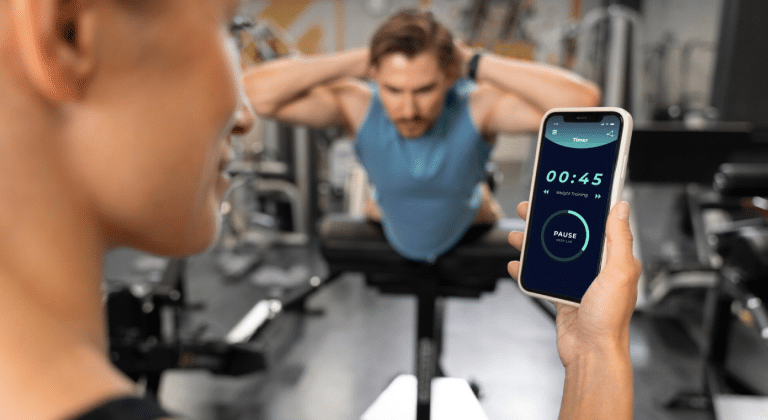
Tracking is non-negotiable. What gets measured gets done. What doesn’t get measured gets forgotten.
Simple tracking methods
Option 1: Checkbox chart
Create a simple weekly chart with habits listed and boxes for each day. Clients check off completed habits. Visual, satisfying, effective.
Option 2: App-based tracking
Dedicated habit tracking features in training software let clients log habits daily and give you real-time compliance data.
Option 3: Wearable integration
For habits like steps, sleep, and activity, fitness trackers automatically capture data without manual logging.
The best system is the one your client will actually use. Ask their preference and accommodate it.
What to track
For each habit, track:
- Completion (yes/no): Did they do it?
- Compliance rate: Percentage completed per week
- Barriers noted: Why did they miss (if they did)
- Trend over time: Is compliance improving, stable, or declining?
Reviewing tracking data effectively
Don’t just collect data—use it.
Weekly review questions:
- Which habit had the highest compliance? (Celebrate this)
- Which habit was hardest? (Troubleshoot this)
- What pattern do you notice? (Missing same habit every weekend? Address specifically)
Red flags in tracking data:
- Compliance dropping week over week (indicates that the habit is too hard or client is losing motivation)
- Specific day patterns (missing habits every weekend, or every Monday)
- All-or-nothing compliance (7/7 days one week, 0/7 the next, suggests an unsustainable approach)
Use this data to adjust, simplify, or provide additional support where needed.
What to do when clients struggle with habits

Even with perfect setup, clients will struggle. Here’s how to troubleshoot effectively.
Diagnose the real problem
When a client isn’t completing habits, don’t just say “try harder.” Figure out why:
Problem: Forgetting
Solution: Add reminders (push notifications via your personal training app, visual cues, habit stacking with existing routines)
Problem: Too complicated
Solution: Simplify. “Drink 80 oz water” becomes “finish two water bottles”.
Problem: Lack of time
Solution: Make it smaller. Can’t walk 30 minutes? Start with 10.
Problem: No motivation
Solution: Reconnect to their “why.” Remind them how this habit supports their bigger goal.
Problem: Environmental barriers
Solution: Change the environment. Can’t eat protein at breakfast because there’s none in the house? Meal prep on Sundays.
The compliance conversation
When compliance is low, have an honest, non-judgmental conversation:
“I noticed hydration was only 2 out of 7 days this week. What got in the way?”
Listen first. Don’t lecture. Often, clients have legitimate barriers you can help solve.
Then problem-solve together:
- “What would make this easier?”
- “When during the day would this fit best?”
- “What support do you need from me?”
Scaling back when necessary
Sometimes the best move is reducing habit targets temporarily. For example:
“I can see you’re stretched thin right now with the work project. Let’s pause the step goal and just focus on keeping up with protein and hydration. Once things settle down, we’ll add it back.”
This prevents the “I’m failing at everything” spiral that causes clients to quit entirely.
Celebrating small wins
Don’t only focus on missed habits. Celebrate the wins (loudly!). For example:
“You hit hydration 6 out of 7 days! That’s incredible progress from where we started. How does it feel to have that dialed in?”
Positive reinforcement strengthens habit loops far more effectively than guilt or criticism.
Scaling habit coaching across your entire client base

Habit coaching seems time-intensive, but with systems, it scales beautifully.
Create habit libraries
Build a library of pre-written habit “recipes” categorized by goal:
Fat loss habit library:
- 8,000 daily steps
- 30g protein at each meal
- 64 oz water daily
- Track all meals in app
- 7+ hours sleep
Muscle building habit library:
- Hit daily calorie target
- 1g protein per lb bodyweight
- Training session attendance 4x/week
- 8 hours sleep
- Post-workout nutrition within 1 hour
When onboarding new clients, pull from your library instead of creating from scratch each time.
Use templated check-ins
Create standard habit review check-inquestions you use with every client:
Create a quick daily form clients complete:
- 1. Which habit felt easiest this week?
- 2. Which was hardest?
- 3. What made the difference on the days you succeeded?
- 4. What would make next week easier?
This speeds up your review process while maintaining quality.
Leverage technology
Coaching software with habit tracking automates much of the administrative work:
Create a quick daily form clients complete:
- Clients log habits in the app
- You see compliance dashboards instantly
- Automated reminders prompt clients to log
- Data is visualized without manual calculations
This makes habit coaching scalable even with 20, 50, or 100+ clients.
Batch your habit coaching time
Instead of randomly checking habits throughout the day, set specific times:
Create a quick daily form clients complete:
- Sunday evening:
Review all clients’ habits for the week. - Monday morning:
Send quick messages to those who struggled. - Wednesday:
Mid-week check-in for clients needing extra support.
Batching makes it manageable and ensures no one falls through the cracks.
Create group habit challenges
Running group challenges around specific habits creates community accountability and reduces individual coaching time:
Create a quick daily form clients complete:
- 30-day hydration challenge
- Step count competition
- Protein streak challenge
Clients support each other, and you facilitate rather than micromanage.
In summary
The trainers who build thriving, sustainable businesses aren’t necessarily the ones with the most exercise science knowledge or the most Instagram followers. They’re the ones who help clients build habits that last.
Training programs get clients started. Habit coaching keeps them going.
When you integrate habit coaching into your programming, you:
- Get better results because clients are consistent outside the gym
- Retain clients longer because they’re seeing real life changes, not just gym changes
- Stand out from competitors who only focus on programming
- Create lasting transformations that stick after clients stop training with you
Once you see the positive results – the improved compliance, the excited clients, the transformations that actually stick – you’ll never go back to coaching without it.
Ready to streamline your habit coaching?
Managing habit tracking, compliance data, and client check-ins manually is exhausting. Spreadsheets get messy. Texts get lost. You forget to follow up with clients who missed their targets.
My PT Hub’s habit tracking feature eliminates all of that. Assign custom habits to each client, set frequency targets and monitor compliance in real-time. Clients log their habits daily in their app, and you see exactly who’s crushing it and who needs support, all in one dashboard.
No more chasing clients for updates. No more manually tracking 20 different habits across 50 clients. Just clear data and more time to actually coach instead of administrate.
Start your 30-day free trial of My PT Hub todayand discover how habit tracking makes you a better coach while saving you hours every week.