
Time management for personal trainers doesn’t just mean squeezing more clients into your schedule. It’s about building a sustainable fitness business that doesn’t leave you burnt out halfway through the week.
Between client sessions, program design, admin work, marketing, and continuing education, most personal trainers feel stretched thin. The result? Long hours, burnout, and a business that runs you instead of the other way around.
These 10 time management tips for personal trainers will help you work smarter, protect your energy, and scale without chaos.
Contents:
- 1. Block your calendar strategically
- 2. Batch similar tasks together
- 3. Use client management software effectively
- 4. Set clear boundaries with clients
- 5. Automate repetitive communications
- 6. Plan workouts in advance
- 7. Limit context switching
- 8. Schedule your own training time
- 9. Track where your time actually goes
- 10. Learn to say no (strategically)
Block your calendar strategically
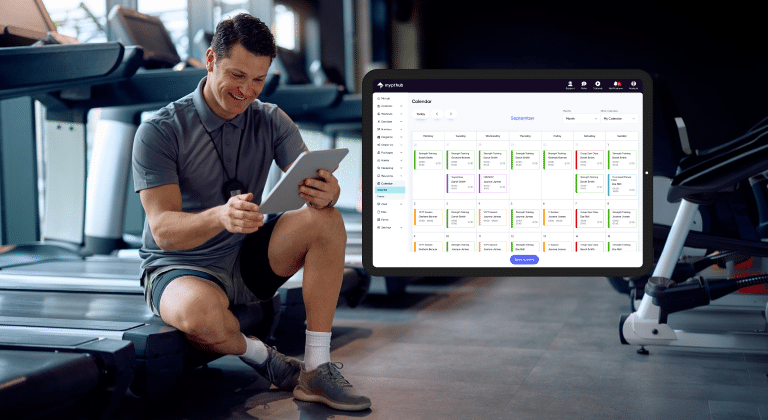
Calendar blocking is the foundation of effective personal trainer time management. Instead of treating your schedule like a free-for-all where clients can book any available slot, create dedicated blocks for specific activities.
Best practice calendar blocks for personal trainers:
- Client sessions (morning and evening)
- Program design (2–3 hour deep work blocks)
- Admin tasks (email, billing, scheduling)
- Marketing and content creation
- Professional development
Schedule high-value activities during your peak energy hours. If you’re sharpest from 8am–12pm, that should be training time (not inbox time).
Batch similar tasks together to reduce mental fatigue
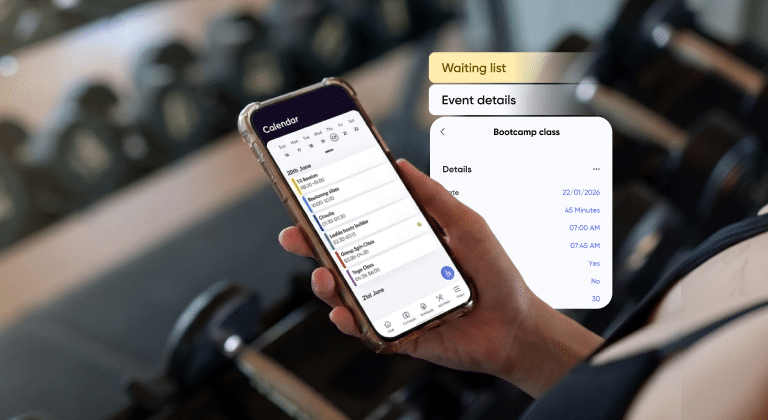
Task switching destroys productivity. Batching keeps your brain in one mode and dramatically reduces wasted time.
Batch these tasks weekly:
- Writing programs for multiple clients
- Reviewing form videos and check-ins
- Creating social media content
- Invoicing and payment follow-ups
- Email responses (2–3 set windows daily)
One focused 90-minute batch often replaces several scattered hours across the week.
Use client management software effectively
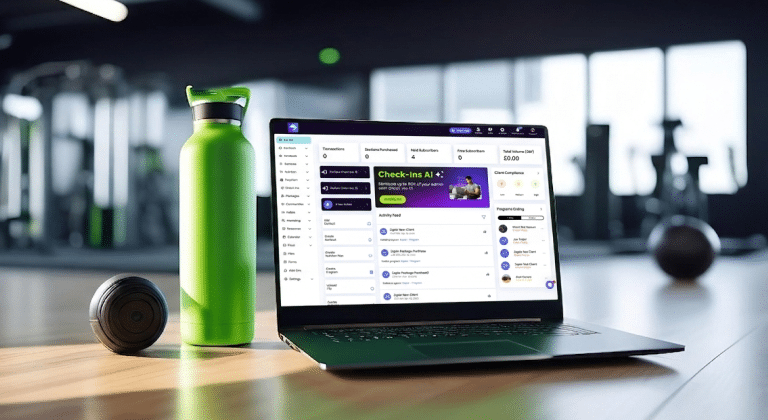
Spreadsheets and note apps might feel sufficient when you have five clients. At fifteen clients, you’re drowning in disorganization.
Quality personal training software centralizes client information, workout programs, progress tracking, messaging, payments and scheduling in one place. This eliminates the time spent switching between multiple apps, searching for client notes, or tracking down payment information.
Time-saving personal training software features to prioritize:
- Workout templates you can customize and assign in minutes
- Automated payment processing and invoice generation
- Centralized client messaging (no more lost texts or DMs)
- Progress tracking that clients update themselves
- Exercise libraries with demo videos already loaded
Choose software that matches your training style. If you primarily do in-person training, prioritize robust scheduling and payment features. Online trainers need strong program delivery and communication tools.
The best software becomes your business operating system, not just another tool you occasionally use.
Set clear boundaries with clients
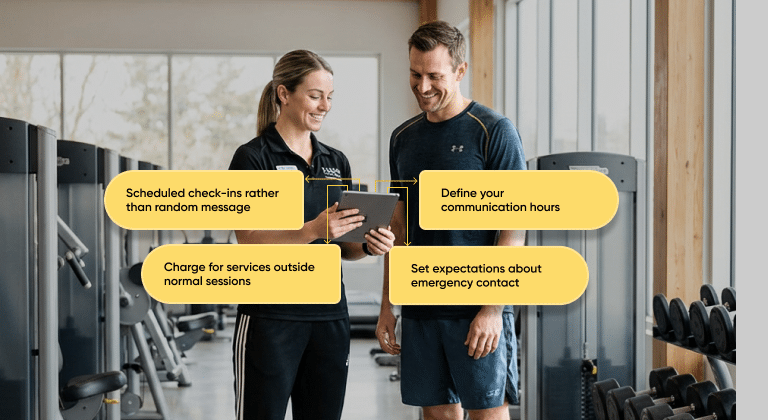
Unlimited availability doesn’t make you a better trainer. It makes you an exhausted one.
New trainers often fall into the trap of being available 24/7, responding to 11pm texts about protein powder and weekend check-ins at 7am. This erodes your personal time and teaches clients they can access you anytime.
Establish boundaries early:
- Define your communication hours (e.g., responses within 24 hours during business days)
- Set expectations about emergency contact (there aren’t many true emergencies in fitness)
- Use scheduled check-ins rather than random message exchanges
- Charge for services outside normal sessions (program adjustments, extended consultations)
Communicate these boundaries professionally during client onboarding. Most clients respect clear expectations. The few who don’t probably aren’t ideal clients anyway.
Professional boundaries actually improve client relationships. Clients value your expertise more when they understand your time has value.
Automate repetitive client communications
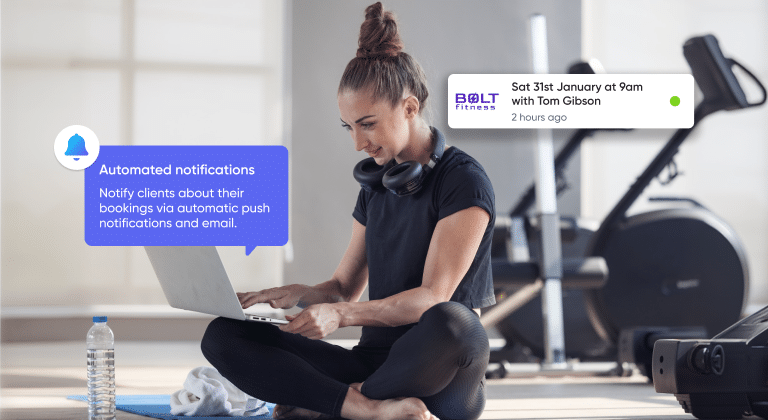
You’ve probably sent the same workout reminders, payment notifications and check-in prompts hundreds of times. That’s hundreds of hours you could reclaim.
Automation handles routine communications without making clients feel like they’re talking to a robot. The key is automating the repetitive stuff while keeping personalized communication for important interactions.
Automate these communications:
- Session reminders (24 hours before appointments)
- Payment receipts and upcoming billing notifications
- Workout assignment notifications
- Weekly check-in prompts
- New client onboarding sequences
- Birthday messages and training anniversaries
Top tip: Modern personal training software providers like My PT Hub include automation features that send these messages based on triggers you set. A client books a session? Automatic reminder sent. Their payment processes? Automatic receipt delivered.
Automation saves time without sacrificing personalization, allowing you to focus on coaching rather than admin.
Plan workouts in advance using templates
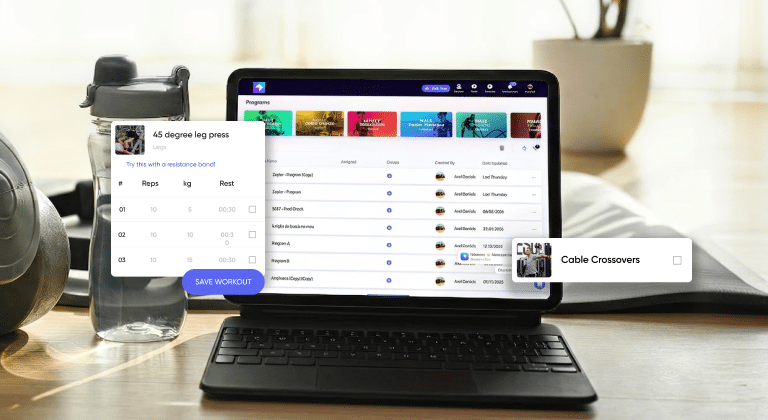
Creating programs on the fly feels flexible but consistently burns time. Planning workouts in advance, especially when you have multiple clients with similar goals, dramatically reduces time spent on program design
Develop a program template library organized by:
- Training goal (strength, hypertrophy, fat loss, athletic performance)
- Experience level (beginner, intermediate, advanced)
- Equipment availability (full gym, home gym, minimal equipment)
- Session length (30, 45, 60 minutes)
When a new client starts, you’re customizing a proven template rather than creating something from scratch. This doesn’t mean cookie-cutter programming. It means having a solid foundation you can personalize based on individual needs, injuries, and preferences.
Plan programs in monthly or quarterly blocks. Knowing your client’s next four weeks of training lets you track periodization, ensure progressive overload, and avoid the Sunday night scramble to write Monday’s workouts.
Many successful trainers dedicate one afternoon weekly or monthly to program planning, knocking out multiple client programs in a focused session.
Related article: Personal Training Templates: Downloadable Workout Programs
Limit context switching

Every time you switch tasks, your brain needs time to refocus. Checking your phone during a training session, jumping from program design to email, or toggling between client conversations fractures your attention and multiplies the time each task requires.
Research suggests it takes an average of 23 minutes to fully refocus after an interruption. That innocent email check during program writing just cost you nearly half an hour of productivity.
Protect your focus:
- Put your phone on do not disturb during client sessions (clients deserve undivided attention)
- Close email and social media during deep work blocks
- Complete one client’s full program before starting another
- Use website blockers during focused work time
- Communicate your focus blocks to clients and staff
Single-tasking feels slower, but accomplishes far more. The trainer who powers through three programs in a distraction-free block finishes faster and creates better work than the trainer who writes three programs while checking Instagram, answering texts, and scrolling emails.
Your attention is your most valuable resource. Guard it accordingly.
Schedule your own training time

Your own training isn’t optional; it’s professional development. You’re testing exercises, understanding how programming feels, maintaining the physique that markets your services and preserving the energy needed to train clients effectively.
Treat your training sessions as non-negotiable appointments. Schedule them in your calendar with the same respect you’d give a paying client. Early morning often works best since client demand is lower, but find what fits your energy and schedule.
Benefits:
- Higher energy
- Better coaching insight
- Stronger personal brand
- Improved client motivation
When you’re fit, energized, and passionate about training, that enthusiasm transfers to clients. When you’re exhausted and detached from your own fitness, clients sense it.
Track where your time actually goes
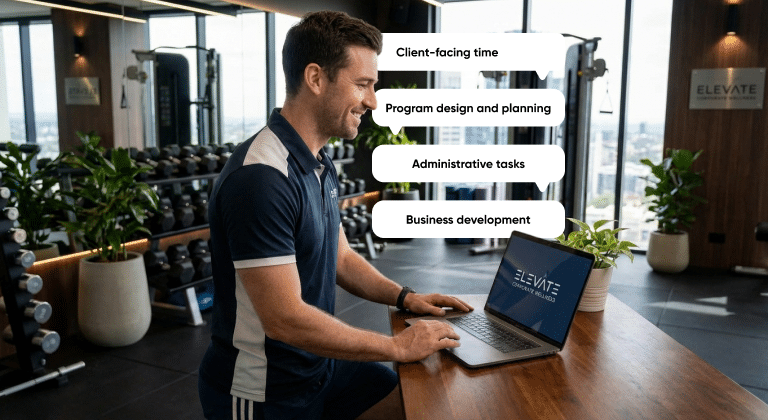
Most trainers significantly underestimate time spent on administrative tasks and overestimate productive work. You might think you spend 30 hours weekly training clients when reality shows 22 hours of actual sessions buried under admin work.
Track your time for one or two weeks. Every activity. Client sessions, program writing, social media, email, business development, education, personal training. Be honest about time wasters (yes, including that “quick” scroll through fitness content).
Use a simple time tracking app or even a paper log. Categories might include:
- Client-facing time (sessions, calls, detailed communication)
- Program design and planning
- Administrative tasks
- Marketing and content creation
- Business development
- Professional development
- Wasted time (distractions, inefficient processes)
This data reveals where time disappears and where you’re actually making money. You might discover you spend 8 hours weekly on tasks you could automate in 30 minutes or that Instagram consumes more time than program design.
Once you know where time goes, you can reclaim it strategically.
Learn to say no (strategically)

Not every opportunity deserves your time (just as not every potential client is your ideal client).
Consider saying no to:
- Clients outside your niche or ideal profile
- Projects that don’t align with business goals
- Opportunities that trade time for minimal benefit
- Discount requests that devalue your expertise
- Scope creep (when clients want extra services without extra payment)
Saying no gets easier with practice and clearer business vision. When you know your priorities (maybe that’s maximizing income while working 30 hours weekly, or building an online business, or specializing in a specific population), decisions become obvious.
Every no protects your best yes. Time management for personal trainers is ultimately decision management.
Take control of your training business
Time management for personal trainers isn’t about hustling harder or fitting more into already packed days. It’s about working smarter, eliminating inefficiencies and building systems that support sustainable success.
Ready to reclaim your time? My PT Hub’s all-in-one platform handles scheduling, program design, client communication, payments and progress tracking in one place.
Start your 30-day free trialand discover how much time you can save when your business systems actually work for you.