
If you’re not using wearable data in your coaching, you might well be missing the bigger picture. You’ll be making decisions based on what clients tell you, which is often incomplete, inaccurate, (or just plain wrong!).

These statements might be true. Or they might be wildly off. Without data, you’re guessing.
Wearables like smartwatches, fitness trackers and heart rate monitors give you objective information about what’s actually happening with your clients between sessions. They track sleep, activity, heart rate, recovery, and more. And when used correctly, this data transforms your coaching from reactive to proactive.
Wearable technology has now evolved from clunky pedometers to sophisticated devices that provide insights we couldn’t dream of a decade ago. The trainers who embrace this data deliver better results, retain clients longer and can justify premium pricing because they’re offering genuinely data-driven, personalized coaching.
In this guide, we’ll break down exactly how to use wearable data to coach better. You’ll learn which metrics actually matter, how to interpret the numbers and how to turn raw data into actionable coaching decisions that get results.
Contents:
- 1. Why wearable data matters for personal trainers
- 2. What wearables can actually track (and what that means for coaching)
- 3. How to integrate wearable data into your coaching
- 4. Practical ways to use wearable data with different client goals
- 5. Common mistakes trainers make with wearable data
- 6. What to do when clients don’t have wearables
- 7. The future of wearables in personal training
Why wearable data matters for personal trainers

Let’s start with the obvious: your clients don’t always tell the truth. This doesn’t mean that they are lying maliciously, they often just lack self-awareness.
They might genuinely think they’re eating 1,500 calories when they’re eating 2,200. They believe they’re getting seven hours of sleep when it’s more like five. They swear they’re pushing hard in workouts when their heart rate never exceeds 60% of max.
Wearable data cuts through the noise and shows you reality.
But beyond catching disconnects between perception and truth, wearables give you something even more valuable: objective feedback on how clients respond to your programming.
Did that high-intensity week trash their recovery? Their heart rate variability (HRV) will tell you before they even realize they’re overtrained. Are they moving enough outside the gym? Step counts show exactly how sedentary they really are. Is poor sleep sabotaging their progress? Sleep data makes it undeniable.
This matters because effective coaching requires consistent tracking. The better your data, the better your decisions. And better decisions mean better results.
What wearables can actually track (and what that means for coaching)

Not all metrics are created equal. Some wearable data is genuinely useful for coaching. Some data is interesting but not the most actionable. And some might just be designed to sell more smartwatches!
Let’s break down what actually matters.
Heart rate and heart rate variability
Heart rate (HR)
shows exercise intensity in real time. When a client says they’re working hard, their HR data tells you if that’s actually true. It’s especially useful for conditioning work, where you can set specific HR zones to ensure they’re training at the right intensity.
Heart rate variability (HRV) is even more powerful. HRV measures the variation in time between heartbeats and serves as an indicator of nervous system status and recovery. Higher HRV generally means good recovery and readiness to train hard. Lower HRV suggests stress, poor sleep, or overtraining.
How to use it:
Check HRV trends weekly. If someone’s HRV is consistently declining, that’s your signal to back off intensity, add a deload week, or investigate lifestyle stressors. If HRV is high and stable, you can push harder.
One strategy that works incredibly well is setting a specific check-in day each week. For example, every Saturday by noon, clients submit their weekly update. This creates routine, reduces the back-and-forth, and makes your coaching schedule predictable.
Sleep tracking
Modern wearables track total sleep time, sleep stages (light, deep, REM), and sleep quality metrics. While the stage data isn’t always perfectly accurate, the trends are incredibly useful.
Poor sleep destroys everything: recovery, performance, hormones, appetite regulation, motivation. If a client is sleeping three hours a night, you can program the perfect workout plan and it won’t matter. The body can’t recover.
How to use it:
Look for patterns. If someone consistently gets poor sleep on Sunday nights (maybe they’re anxious about the work week), you might shift their heavy training day away from Monday. If they’re averaging less than six hours nightly, sleep becomes a primary intervention before anything else.
For clients struggling with general wellness, improving sleep habits through tracked data often yields bigger results than adding more training volume.
Activity and step counts
Steps aren’t the whole picture of movement, but they’re a simple, easy-to-track proxy for daily activity. And for most people, daily movement outside the gym matters more for fat loss than the three hours per week they spend training with you.
Someone who trains hard three times per week but sits for 12 hours daily and averages 2,000 steps isn’t going to see great results. Meanwhile, someone who hits 10,000 steps daily – even with moderate workouts – will likely progress faster.
How to use it:
Set baseline step goals (usually 7,000-10,000 depending on the client) and track compliance. If someone’s stuck on a plateau, check their step data. Often, they’ve unconsciously become more sedentary as the diet progressed. Increasing daily movement often breaks plateaus without touching nutrition or training.
Workout intensity and calories burned
Most wearables estimate calories burned during workouts. Take these numbers with a grain of salt, as the numbers can vary widely between devices. But the relative intensity data (time in different HR zones, average HR, peak HR) is useful.
You can see if clients are actually following your program intensity or if they’re sandbagging. You can identify if someone’s constantly redlining their heart rate (potentially overtraining) or if they’re not pushing hard enough to create adaptation.
How to use it:
Compare workout HR data against perceived exertion. If someone says a workout felt “really hard” but their average HR was 55% of max, they need better intensity calibration. If they’re consistently hitting 90%+ max HR on sessions programmed for moderate intensity, they might be going too hard and risking burnout.
Recovery metrics
Many devices now provide recovery scores or readiness ratings that combine HRV, sleep, and activity data into a single number. While these algorithms aren’t perfect, they’re getting better and can be useful for quick assessments.
How to use it:
Let these scores guide your day-to-day intensity adjustments. Low recovery score? Scale back intensity that day or focus on technique work. High recovery score? It’s a good day to test maxes or push volume.
How to integrate wearable data into your coaching
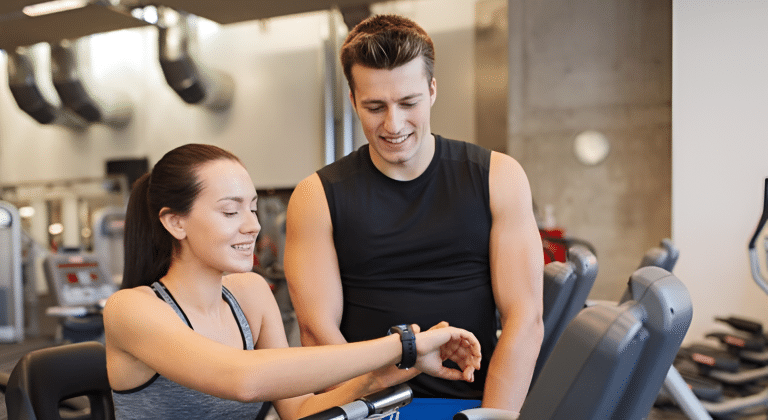
Having data is one thing. Using it effectively is another. Here’s how to make wearable data a core part of your coaching without drowning in numbers.
Set clear expectations from day one
When onboarding clients with wearables, explain exactly how you’ll use their data and what you need from them:
- Wear the device consistently (especially overnight for sleep tracking)
- Sync data regularly (daily is ideal)
- Grant you access to view their metrics
- Understand that you’ll reference this data in check-ins and programming decisions
Make it clear that wearable data isn’t about surveillance, it’s about giving them better coaching. When clients understand the “why,” compliance goes up.
Many online personal trainers find that wearable integration is one of their biggest competitive advantages, allowing them to provide personalized coaching at scale.
Top tip: personal training apps like My PT Hub enable you to view all of your clients’ wearable health data alongside their logged workouts, meal plans, habits and more in one place, making it easier to make smarter, data-driven coaching decisions.
Use data to validate (or challenge) what clients tell you
When a client says they’re exhausted and training feels hard, check their sleep and HRV data. Often, you’ll see they got four hours of sleep three nights in a row. Now you can have a productive conversation about sleep hygiene instead of just adjusting their program blindly.
Or maybe they insist they’re doing everything right but not seeing results. Their step count shows they’ve dropped from 9,000 daily steps to 4,000. That’s your answer: they’ve unconsciously reduced daily activity as their energy dipped. Problem identified, solution obvious.
Data removes the guesswork and helps clients see the truth about their behaviors.
Spot patterns that clients miss
Clients live day-to-day. They might not see patterns over weeks or months. You do.
Maybe every time they travel for work, their sleep tanks and their HRV crashes for a week afterward. Now you know to adjust programming around business trips; lighter training leading up to travel and don’t expect hard sessions for a few days after they return.
Or perhaps their step count always plummets on weekends. Instead of letting that slide, you create a weekend walking challenge or suggest active weekend activities to maintain consistency.
These pattern-based interventions are only possible with longer term data tracking.
Adjust programming based on real-time feedback
The best use of wearable data is making your programming adaptive rather than rigid.
Traditional periodization sets training intensity weeks in advance. But what if your client has a terrible week at work, sleeps poorly, and their HRV tanks? Forcing them through a programmed high-intensity week will likely lead to poor performance or injury.
Instead, use wearable data to make intelligent adjustments:
- HRV down? Lower intensity, focus on technique and movement quality
- Sleep poor? Reduce volume, add an extra rest day
- Resting heart rate elevated? Sign of overtraining or illness—scale back significantly
This individualized approach to programming keeps clients healthier, progressing steadily and feeling heard.
Practical ways to use wearable data with different client goals

How you use wearable data should vary based on what clients are trying to achieve. Here’s how to apply it to common training goals.
Fat loss clients
Primary metrics: Steps, sleep, workout intensity
Fat loss clients need to maintain a calorie deficit while preserving muscle and energy. Wearable data helps you monitor if they’re actually creating that deficit through activity.
What to track:
- Daily step counts (aim for 8,000-12,000 depending on baseline)
- Sleep duration and quality (minimum 7 hours)
- Resting heart rate (elevated RHR can indicate excessive calorie deficit or overtraining)
- Workout HR to ensure they’re training hard enough to preserve muscle
Red flags in the data:
- Steps dropping week over week (adaptive thermogenesis i.e. they’re unconsciously moving less)
- Sleep quality declining (often happens when dieting too aggressively)
- HRV trending down (sign they need a diet break or refeed)
- Elevated resting HR (possible overtraining or under-recovery)
When you see these patterns, you can adjust the plan before the client hits a wall and wants to quit.
Performance and strength clients
Primary metrics: HRV, sleep, recovery scores
These clients need to balance training stress with adequate recovery to drive adaptation. Push too hard without recovery and progress stalls. Rest too much and they don’t create enough stimulus.
What to track:
- HRV trends (weekly averages more important than daily fluctuations)
- Sleep quality, especially deep sleep (critical for physical recovery)
- Resting HR upon waking (stable indicates good recovery)
- Recovery scores to guide daily intensity
How to use the data:
- Schedule heavy training days when recovery metrics are optimal
- Add deload weeks when HRV trends downward for 2-3 weeks
- Investigate lifestyle factors if sleep consistently suffers
- Use data to convince hard-charging clients that rest days are necessary
Strength athletes often want to train hard all the time. Data gives you objective proof that recovery is when gains actually happen.
General health and wellness clients
Primary metrics: Activity levels, sleep, heart rate trends
These clients aren’t chasing performance goals; they want to feel better, have more energy, and build sustainable habits. Wearable data helps make health improvements tangible and motivating.
What to track:
- Daily steps and general activity (consistency matters more than intensity)
- Sleep duration and consistency (regular sleep schedules)
- Resting heart rate over months (should gradually decrease with improved fitness)
- Active minutes per week
How to use the data:
- Set achievable activity goals and celebrate consistency
- Show how their resting heart rate has improved over months (proof of cardiovascular health gains)
- Identify sleep patterns and work on improving sleep hygiene
- Use data to create personalized wellness challenges that feel achievable and rewarding
For these clients, wearable data makes abstract health concepts concrete and provides motivation through visible progress.
Common mistakes trainers make with wearable data
Even experienced coaches mess this up. Here are the biggest pitfalls to avoid:
Heart rate and heart rate variability
Mistake #1: Drowning in data
Just because you can track 50 metrics doesn’t mean you should. Pick 3-5 key data points relevant to each client’s goals and focus on those. Everything else is noise.
Mistake #2: Taking single-day data too seriously One bad night’s sleep or one low HRV reading doesn’t mean much. Look for trends over 5-7 days minimum before making programming changes.
Mistake #3: Forgetting that wearables aren’t perfect
Calorie burn estimates are often wrong by 20-30%. Sleep stage detection isn’t always accurate. Use data as guidance, not gospel. Always combine wearable data with subjective feedback from clients.
Mistake #4: Not explaining data to clients
If you reference HRV or sleep stages without educating clients on what these mean, they’ll feel confused or anxious. Take time to explain what you’re tracking and why it matters.
Mistake #5: Making clients feel surveilled
Frame wearable tracking as a tool to optimize their experience, not as you checking up on them. “This data helps me give you better coaching” lands better than “I’ll be monitoring your activity.”
Mistake #6: Ignoring data that conflicts with your plan
If wearable data suggests a client is overtraining but your program says this is a high-volume week, listen to the data. Rigid adherence to a plan despite warning signs is bad coaching.
What to do when clients don’t have wearables

Not every client owns a smartwatch or fitness tracker. And that’s okay. You can still coach effectively without wearable data.
Use subjective measures:
Simple questions work surprisingly well:
- “On a scale of 1-10, how recovered do you feel today?”
- “How’s your sleep been this week?”
- “How did that workout feel intensity-wise?”
Suggest affordable options:
Basic fitness trackers cost $30-50. For clients serious about their goals, this is a worthwhile investment. Frame it as a tool that will accelerate their progress.
Focus on what you can measure:
Without wearables, emphasize performance tracking in workouts (weights lifted, reps completed, workout duration), body measurements, progress photos, and how clients feel. These traditional metrics still tell you plenty.
Don’t make it mandatory:
Some clients are uncomfortable with constant tracking. Respect that. You can still deliver excellent coaching without wearable data, it just requires more communication and check-ins.
The future of wearables in personal training
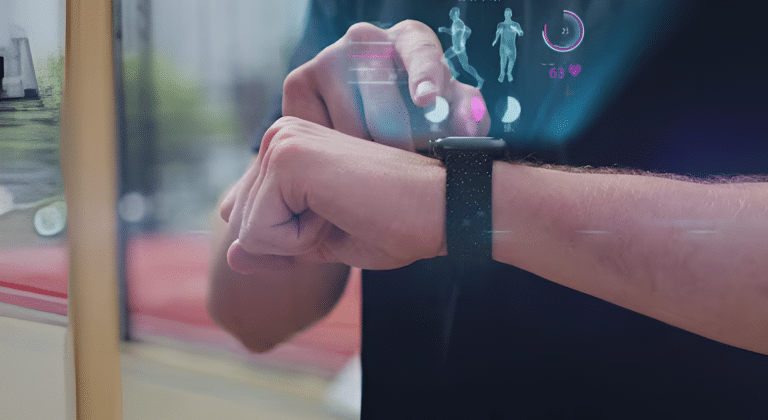
Wearable technology is advancing fast. Here’s what’s coming and how it’ll change coaching:
Better accuracy:
Sleep tracking, calorie estimation, and biometric measurements will continue improving. The data will become more reliable and actionable.
More health markers:
Future wearables will likely track blood glucose, hydration status, stress hormones, and other biomarkers that currently require lab tests. This will allow unprecedented personalization.
AI-driven insights:
Machine learning will identify patterns in client data that humans miss, providing predictive recommendations. AI tools are already transforming how coaches analyze and respond to client data.
Seamless integration:
Wearables will sync effortlessly with coaching platforms, making data review quick and automatic. Software that integrates with fitness wearables like Apple Watch, Fitbit, and others will become the industry standard.
The trainers who learn to leverage these tools now will have a massive advantage as technology continues improving.
The bottom line on wearables and coaching
Wearable data won’t replace good coaching fundamentals like program design, exercise selection, relationship building, motivation. But it will make good coaching even better.
You’ll spot problems earlier. You’ll make smarter programming adjustments. You’ll provide clients with objective evidence of their progress. And you’ll deliver genuinely personalized coaching instead of generic programs.
The key is using data intelligently:
- Focus on metrics that matter for each client’s specific goals
- Look for trends, not single data points
- Combine objective data with subjective feedback
- Adjust programming based on what the data reveals
- Educate clients so they understand and value the insights
The coaches who master this skill will be the ones thriving in five years. Because clients can find generic workout plans anywhere. What they can’t find everywhere is a coach who truly understands their individual physiology and makes smart, personalized decisions based on real data. That’s the competitive advantage wearable data provides.
Ready to integrate wearable data into your coaching?
Tracking wearable data manually across spreadsheets and different apps is a nightmare. You need everything in one place, including client workout data, nutrition logs, check-ins, and health metrics from fitness wearables.
My PT Hub integrates seamlessly with Apple Watch, Fitbit, MyFitnessPal, and other leading health apps, pulling all your clients’ data into one comprehensive dashboard. This means that you can monitor sleep patterns, activity levels, workout intensity, and recovery metrics alongside your training programs and nutrition plans.
Start your 30-day free trial of My PT Hub today and discover how integrated wearable data transforms your coaching from good to exceptional. No credit card required.