
The personal training grind is real. Early morning sessions, late evening clients, and everything in between can leave you exhausted and wondering if there’s a better way to earn without being glued to the gym floor.
The good news? There is a solution: passive income.
Passive income isn’t about getting rich quick or making money while doing nothing (that’s a myth), but it is about building income streams that don’t require you to simply trade your time for money.
For fitness coaches and personal trainers, passive income means creating products, systems, or services once and selling them repeatedly. It’s the difference between training one client at a time and reaching hundreds of people simultaneously. Here’s how to build passive income streams that actually work for your fitness business.
Contents:
- 1. Create and sell pre-built workout programs
- 2. Develop a membership site with exclusive content
- 3. Write and sell fitness ebooks or guides
- 4. Build an online course or workshop
- 5. Earn affiliate commissions from products you recommend
- 6. License your content to other trainers or platforms
- 7. Create a subscription-based app or training platform
- 8. Sell digital templates and resources
- 9. Monetize your expertise through group coaching programs
- 10. Build a YouTube channel with ad revenue potential
1. Create and sell pre-built workout programs

Pre-built workout programs are the bread and butter of passive income for personal trainers. Unlike custom programming for individual clients, these are ready-made plans designed for specific goals or demographics that customers can purchase and follow independently.
The key is solving a specific problem for a defined audience. “Get fit” is too broad. “12-week strength program for busy moms who train at home” is specific and marketable. Design programs for popular niches like postpartum recovery, desk worker mobility or beginner powerlifting.
Create once, sell many times. Your program might include video demonstrations, written instructions, progress tracking sheet and nutritional guidance. Package it professionally and sell it through your website or personal training app. Consider pricing anywhere from $20 for basic plans to $200 for comprehensive programs.
The beauty of this model is scalability. Whether 10 people or 1,000 people buy your program, you’ve only had to do the work once. Focus on creating high-quality content that delivers results, and positive reviews will drive future sales without additional effort from you.
If you’re looking to expand your services beyond one-on-one training, check out our guide on how to become an online personal trainer for tips on transitioning to digital offerings.
Related article: Personal Training Templates: Downloadable Workout Programs
2. Develop a membership site with exclusive content

Membership sites offer recurring revenue, which is the holy grail of passive income. Instead of one-time purchases, members pay monthly or annually for access to your content library, community and ongoing resources.
Your membership could include weekly workout videos, monthly training programs, nutrition recipes, live Q&A sessions or exclusive community forums. The ongoing nature means you’ll need to add fresh content regularly, but the foundational library you create becomes increasingly valuable over time.
Pricing for fitness memberships typically ranges from $19 to $99 per month depending on what you offer. Even 50 members at $29 per month generates $1,450 in recurring revenue. As your membership grows, so does your income without linearly increasing your workload.
Platforms like Patreon, My PT Hub or your own website can host your membership. The key is consistency. Members need to feel they’re getting value each month, which means delivering new content on a predictable schedule. Set expectations clearly and stick to them.
3. Write and sell fitness ebooks or guides

Ebooks are relatively quick to create and can generate income for years. Focus on topics you’re constantly explaining to clients. Common questions make excellent ebook subjects because they indicate real demand.
Popular fitness ebook topics include meal prep guides, supplement primers, exercise technique manuals, injury prevention strategies or mindset and motivation resources. Keep your ebook focused on one specific outcome rather than trying to cover everything about fitness.
Length matters less than value. A 30-page guide that solves a specific problem is more valuable than a 200-page generic fitness book. Include actionable information, clear instructions, and practical examples that readers can implement immediately.
Sell your ebook through Amazon Kindle Direct Publishing, your My PT Hub account, your own website or include it as a bonus with other services. Pricing could range anywhere from $5 to $50 depending on depth and specialization. Once created and uploaded, ebooks require minimal maintenance while continuing to generate sales.
4. Build an online course or workshop

Online courses command higher prices than ebooks because they provide more comprehensive education and often include video instruction. If you have specialized knowledge or a proven system for achieving specific results, a course is an excellent passive income vehicle.
Structure your course around a clear transformation. “From Couch to 5K in 8 Weeks” or “Master Your First Pull-Up” are specific outcomes that attract buyers. Break the content into modules or lessons that progressively build on each other.
Include multiple content types like video lessons, written materials, quizzes, and assignments. The more comprehensive and engaging your course, the higher you can price it. Fitness courses typically sell for anywhere from $97 to $497 or more for advanced programs.
You can host courses on your own website using WordPress plugins, via My PT Hub or other educational platforms like Udemy. Once your course is built and marketed, students can enroll and complete it without your direct involvement.
5. Earn affiliate commissions from products you recommend
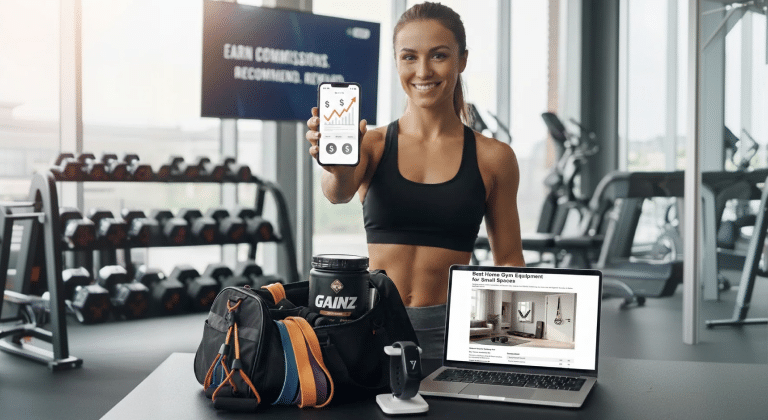
Affiliate marketing allows you to earn commissions by recommending products you already use and trust. If you’re telling clients to buy resistance bands, protein powder, or fitness trackers anyway, why not earn a percentage of those sales?
Sign up for affiliate programs with companies whose products you genuinely believe in. For example, supplement companies often offer 10% to 30% commissions. Fitness equipment brands may provide even higher percentages.
Integrate affiliate links naturally into your content. Write blog posts reviewing equipment, create comparison guides or mention products in your social media content. Transparency is crucial; always disclose when you’re using affiliate links to maintain trust with your audience.
The passive element comes from evergreen content. A blog post titled “Best Home Gym Equipment for Small Spaces” can generate affiliate commissions for years if it ranks well in search engines. Create valuable, helpful content and the affiliate income follows naturally.
6. License your content to other trainers or platforms

If you’ve created quality workout videos, training programs, or educational content, consider licensing it to other trainers or fitness platforms. This allows them to use your content with their clients while you earn royalties or licensing fees.
Corporate gyms and online training platforms constantly need fresh content. They’ll pay for the rights to use professionally created workouts, educational videos or training frameworks. You retain ownership while they gain access to ready-made content for their members.
Licensing deals vary widely. You might charge a flat annual fee, take a percentage of revenue generated from your content or negotiate per-use fees. Research platforms actively seeking trainer content and pitch your unique offerings.
This income stream requires creating high-quality content upfront, but once licensed, you earn ongoing payments without additional work. It’s particularly valuable if you’ve developed a unique training methodology or specialized program format.
7. Create a subscription-based app or training platform
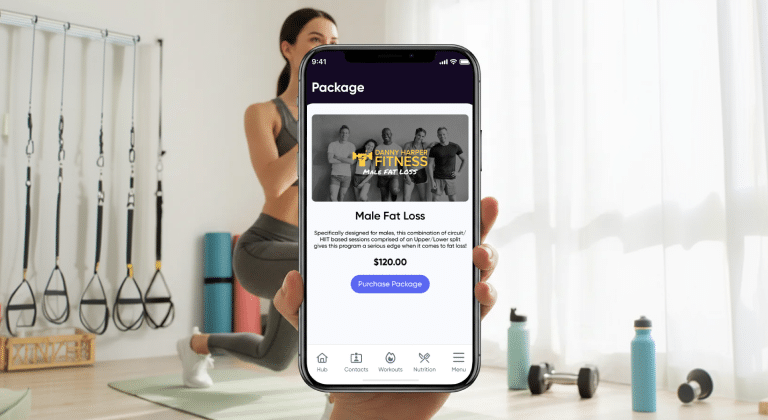
Building your own branded app or platform offers tremendous passive income potential. With the right tools, creating a custom-branded fitness app is more accessible than ever.
Your app could deliver daily workouts, track client progress, provide nutrition guidance, or offer community features. The subscription model means users pay monthly or annually for access, creating predictable recurring revenue.
Modern platforms like My PT Hub allow fitness professionals to create branded apps without coding knowledge. You focus on content and programming while the platform handles the technical infrastructure. This eliminates the need for massive development budgets while still giving you ownership of your client experience.
Consider whether you want to create general fitness content for a broad audience or specialize in a specific niche. Specialized apps often convert better because they solve specific problems for defined audiences. Price subscriptions based on the value delivered; for example, $9 per month for limited access and $49 per month for unlimited access to your full on-demand library.
For more information on incorporating online training into your business model, read our article on how to incorporate online PT programming.
8. Sell digital templates and resources
Trainers constantly need resources like workout templates, client intake forms, assessment sheets, meal planning templates, habit trackers and business documents. If you’ve created effective versions of these, package and sell them to other fitness professionals.
Digital products have near-zero production costs and can be sold repeatedly without additional effort. Create templates in editable formats like Google Sheets, Excel, Canva, or PDF forms. Make them professional, user-friendly, and immediately actionable.
Price individual templates between $7 and $27, or bundle multiple resources together for $47 to $97. Market these products to other trainers through social media, fitness business groups, or your own website. Consider creating a “Trainer Resource Shop” as an additional revenue stream.
The beauty of templates is their timeless nature. A well-designed client assessment form remains useful indefinitely. Create once, sell forever, and watch passive income accumulate from fellow trainers grateful for ready-made solutions.
Top tip: Coaches can create and charge all of the above directly within My PT Hub, plus add additional trainers into your master account to manage individual or shared client bases under your brand.
9. Monetize your expertise through group coaching programs

While group coaching requires some ongoing involvement, it’s significantly more passive than one-on-one training. You leverage your time by coaching multiple clients simultaneously, often through a combination of group calls, shared resources and community support.
Structure your group program around specific timeframes and outcomes. An 8-week fat loss challenge or 12-week strength building program works well. Provide group coaching calls, shared workout programs, community forums for peer support, and some level of individual feedback.
Price group programs lower than one-on-one coaching but higher than self-guided courses. For example, with 20 participants in a $497 program, you’d earn $9,940 for a single cohort.
Run programs in cohorts (groups that start and finish together) to create urgency and community. Between cohorts, the program essentially runs itself as you recycle proven content and frameworks. This approach generates substantial income while freeing you from the constraints of individual session scheduling.
10. Build a YouTube channel with ad revenue potential
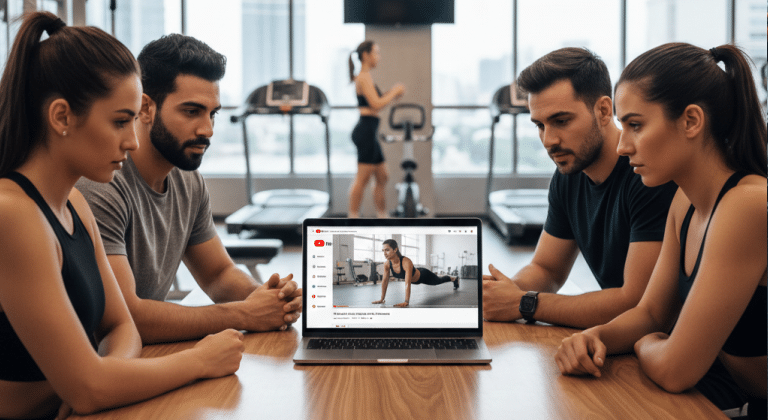
YouTube offers multiple passive income opportunities through ad revenue, sponsorships, and driving traffic to your other products. While building a channel requires consistent effort upfront, successful videos continue generating income long after publication.
Focus on creating evergreen content that remains relevant over time. “How to Do a Proper Squat” will attract views for years, unlike commentary on this month’s fitness trend. Tutorial videos, exercise demonstrations and educational content have long shelf lives.
Monetization begins once you reach 1,000 subscribers and 4,000 watch hours. Ad revenue varies widely based on your niche and viewer demographics, but YouTube channels typically earn $3 to $5 per 1,000 views. A video with 100,000 views might generate $300 to $500 in ad revenue.
Beyond ads, YouTube drives traffic to your other income streams. Include links to your programs, courses or affiliate products in video descriptions. Your channel becomes a marketing engine that feeds all your other passive income sources while generating its own revenue.
For comprehensive strategies on growing your fitness business through content creation, explore our article on personal training marketing.
The reality check on passive income
Truly passive income doesn’t exist. Everything on this list requires substantial upfront work and ongoing maintenance. The difference is the ratio of time invested to income generated.
One-on-one training offers a 1:1 ratio. One hour of work equals one session of payment. Pre-built programs might offer a 1:100 ratio. Twenty hours creating a program could generate sales to 100 clients without additional time investment per sale.
Successful passive income in the fitness industry requires:
- Quality content that delivers real results
- Effective marketing to reach your target audience
- Systems for delivering products automatically
- Patience as income builds gradually rather than overnight
Don’t expect to create one product and retire. Building multiple streams that compound over time is the best way to scale. Your first ebook might generate $100 per month. Add a membership site for $1,500 monthly, affiliate income for $300, and group programs for $3,000 per quarter,and you’ve created meaningful supplemental – or even primary! – income.
Getting started creating passive income today
The best passive income strategy depends on your strengths, existing audience and available time. If you love creating content, start with an ebook or course. If you’re great on camera, build a YouTube channel. If you have existing clients who constantly ask the same questions, create pre-built programs addressing those needs.
Consider beginning with one stream rather than attempting all 10 simultaneously. Create something excellent, test it with your existing audience, gather feedback, and refine it. Once that income stream flows consistently, add another.
Build your passive income foundation
Creating passive income streams requires the right infrastructure to deliver products, manage customers and handle payments efficiently. Trying to cobble together multiple platforms for these functions creates unnecessary complexity and eats into your passive income with subscription fees and technical headaches.
My PT Hub provides fitness professionals and personal trainers with everything needed to build and scale passive income streams. Create and deliver workout programs and on-demand content (everything from ebooks to full video courses), manage online clients, build membership offerings and handle payments all within one platform. Your branded app gives clients a professional experience while you focus on creating content that generates income.
Ready to start building your passive income empire?
Begin your 30-day free trial of My PT Hub today and discover how the right platform can streamline your passive income efforts while helping you deliver exceptional value to clients.