
Running a successful personal training business isn’t just about being great at coaching. It’s about creating business systems for personal trainers that allow you to deliver a consistent, high-quality service without burning out or drowning in admin chaos.
The difference between trainers who achieve six-figure incomes and those who struggle often comes down to their systems. Trainers without systems spend their evenings responding to scattered messages, manually tracking client progress, chasing payments and wondering why they’re working 60-hour weeks for 30 hours of actual coaching. Trainers with systems? They work smarter, scale faster and actually enjoy their business.
This guide breaks down 10 essential business systems for personal trainers to help you build a sustainable, profitable training business.
Contents:
- 1. Client onboarding system: make first impressions count
- 2. Program delivery system: consistency at scale
- 3. Communication system: stay connected without getting overwhelmed
- 4. Progress tracking system: show clients what they’re achieving
- 5. Payment and billing system: get paid on time, every time
- 6. Scheduling system: protect your time and sanity
- 7. Check-in system: automate accountability
- 8. Lead management system: convert prospects efficiently
- 9. Content creation system: market without the overwhelm
- 10. Review and optimization system: continuous improvement
Why business systems matter for personal trainers
As your client base grows, complexity grows with it. Without systems, growth leads to chaos. With systems, growth leads to leverage.
Strong systems for personal trainers allow you to:
- Deliver consistent coaching at scale
- Improve client retention and accountability
- Reduce admin time and mental load
- Create predictable income
- Build a business that doesn’t rely entirely on you
Let’s break down the 10 systems every successful personal trainer needs.
Client onboarding system: make first impressions count
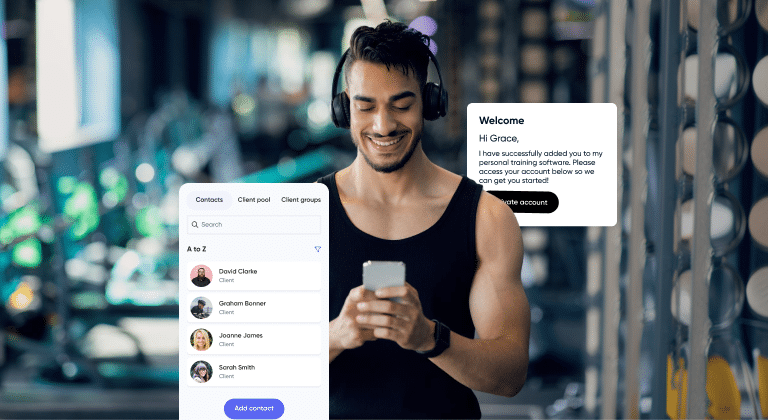
How to create a scalable first impression
Your onboarding system sets the tone for the entire client relationship. A smooth, professional onboarding process demonstrates that you run a serious business and makes clients feel confident in their decision to work with you.
What your onboarding system should include
- Pre-consultation preparation: Gather basic info (fitness history, goals, injuries, preferences) before the consultation to save time and focus on coaching value.
- Consultation structure: Use a consistent framework for discovery calls or in-person meetings.
- Welcome sequence: Automate emails, platform instructions and forms when clients sign up.
- First-week experience: Plan check-ins, program delivery, and initial feedback systematically.
Top tip: Document your current onboarding process, then automate repetitive steps. Most personal training software allows you to trigger forms, messages, and workflows automatically. Platforms like My PT Hub let you create automated onboarding sequences so no client slips through the cracks.
Program delivery system for personal trainers
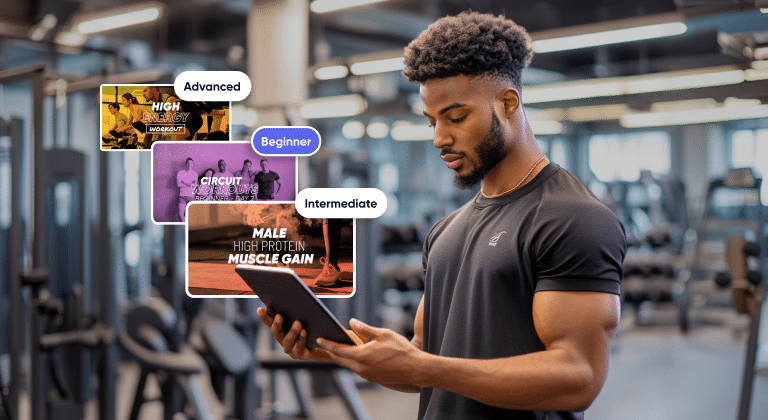
How to deliver consistent training programs at scale
Manually creating programs for multiple clients is inefficient. A program delivery system helps you provide personalized training while leveraging templates.
Build your program library
Create core templates such as:
- Beginner strength
- Fat loss
- Muscle building
- Home workouts
- Limited-equipment programs
Each template should include exercises, sets, reps, progression rules and coaching notes.
Systematize program updates
Decide how often programs are updated—weekly, bi-weekly, or monthly—and apply this consistently. This removes reactive updates and ensures all clients receive regular attention.
Top tip: Batch similar clients together using a system like My PT Hub’s ‘Groups’ feature. If you have five clients doing fat loss programs, update all five at the same time. This focused approach is far more efficient than context-switching between different client types throughout the week.
Related article: Personal Training Templates: Downloadable Workout Programs
Communication system for personal trainers

How to manage client communication without burnout
Scattered communication leads to missed messages, unclear boundaries, and constant stress. A centralized client communication system for personal trainers is essential.
Best practices:
- Choose one primary channel (ideally your personal training software)
- Use email as a secondary channel for admin and billing
- Set clear response-time expectations during onboarding
Create message templates for common questions like exercise substitutions, travel workouts or nutrition basics.
Top tip: My PT Hub’s built-in client messaging tools support centralized chat, automated touchpoints, and broadcast messages.
Progress tracking system for personal trainers
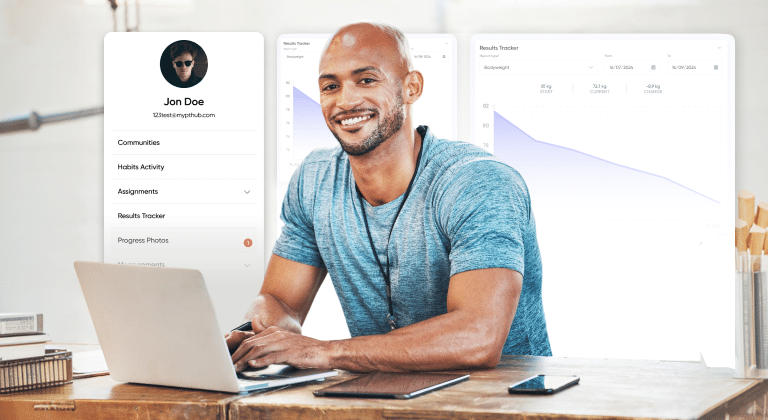
How to show clients measurable results
Clients who can’t see progress quit. It’s that simple. A strong progress tracking system makes results visible and motivating.
Track consistently:
- Performance: weights, reps, workout completion
- Body composition: photos, measurements, trends
- Behaviors: adherence, habit completion
- Subjective feedback: energy, confidence, sleep
Make progress undeniable:
Schedule monthly or quarterly progress reviews to show long-term trends rather than daily fluctuations.
Top tip: Use personal training software that automatically captures and visualizes this data. Manual tracking via spreadsheets becomes unsustainable at scale. Platforms like My PT Hub automatically track performance data, display progress graphs and store progress photos in organized timelines, making it easy to demonstrate client wins.
Payment and billing system for personal trainers
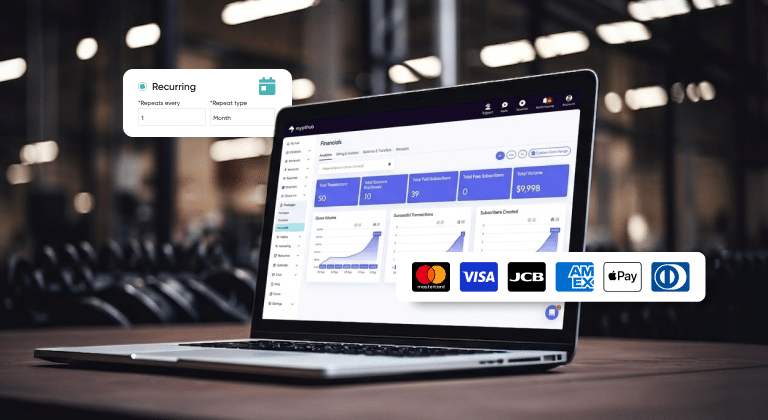
How to automate payments and improve cash flow
Inconsistent payments create stress and instability. A reliable payment system for personal trainers removes awkward conversations and ensures predictable revenue.
Key components:
- Automated recurring billing
- Clear cancellation and refund policies
- Standardized packages (1-, 3-, and 6-month options)
Top tip: My PT Hub’s Packages feature allows you to create packages, process automated payments, track income and expenses, and generate receipts, all within the same platform where you manage training. This integration eliminates the need for separate billing software.
Scheduling system for personal trainers
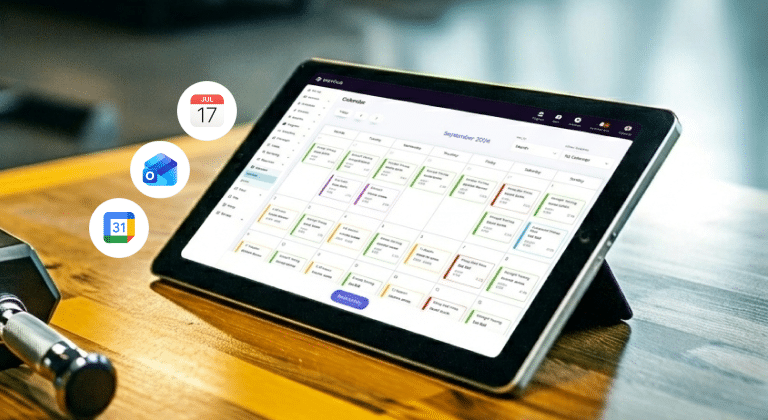
How to control your calendar and reduce no-show
Without a scheduling system, your calendar controls you. With one, you control your time.
Scheduling best practices:
- Time-block coaching, admin, marketing, and personal time
- Enable client self-booking within your availability
- Add buffer time between sessions
- Enforce cancellation and no-show policies
Top tip: Use software with integrated scheduling that syncs across devices and sends automated reminders to reduce no-shows. My PT Hub’s Calendar feature allows clients to book sessions directly through their app while respecting your availability settings.
Automated check-in system for personal trainers
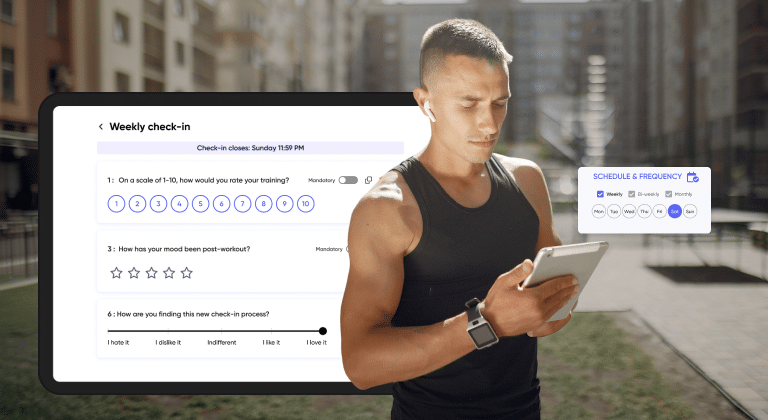
How to improve accountability and retention
Regular check-ins keep clients accountable and give you insights into their progress and challenges. But manually messaging dozens of clients for check-ins every week is unsustainable. Systematize it.
Build an automated check-in system:
- Schedule weekly or bi-weekly check-in forms
- Use consistent core questions for trend analysis
- Batch-review responses during set admin time
- Flag high-risk responses (injury, burnout, dropout risk)
Implementation tip
My PT Hub’s Automated Check-Ins feature allows you to create recurring check-in forms, view responses in one organized dashboard, and identify clients who need attention. This feature alone can save you 5-10 hours per week compared to manual check-ins, or even more if using Check-Ins AI.
Lead management system for personal trainers
How to convert more personal training leads into clients
Without a lead system, inquiries get lost. A lead management system for personal trainers ensures consistent follow-up and higher conversions.
Core elements:
- Lead capture forms
- Automated response sequences
- Consultation scheduling workflows
- Lead nurturing for “not ready yet” prospects
Track key metrics like lead volume, consultation rate, and conversion rate. For deeper strategies, see lead generation strategies for personal trainers:
Content creation system for personal trainers

How to convert more personal training leads into clients
Marketing only feels overwhelming when it’s unstructured.
Create a simple content system:
- Batch content creation weekly or bi-weekly
- Define 3–5 content pillars (education, motivation, proof, personality, promotion)
- Repurpose content across platforms
- Plan using a basic content calendar
Related article: How to create a content calendar for personal trainers:
Business review & optimization system for personal trainers
How successful personal trainers improve their systems over time
Systems only work if they’re reviewed.
Monthly reviews should track:
- Client retention
- Revenue trends
- Time allocation
- Client feedback
Quarterly deep dives: Identify bottlenecks, automation opportunities, and one or two improvements to implement next.
Related article: Personal trainer KPIs: Metrics you should track monthly:
Building systems that scale your success
Great coaching gets results. Great systems build sustainable businesses.
Every system you implement reclaims time. Those hours compound. Within months, trainers who systemize their operations work fewer hours, serve more clients and enjoy their business again.
Start with the system causing the most pain right now:
- Too many messages → communication system
- Chasing payments → billing system
- Rebuilding programs → program templates
Best personal training software to systemize your business
You can build systems manually, but juggling spreadsheets, apps, and admin quickly becomes another form of chaos.
The most successful trainers use all-in-one personal training software that integrates client management, scheduling, billing, progress tracking, and automation.
My PT Hub is built specifically for personal trainers who want scalable, automated businesses. Features include:
- Automated check-ins
- Program templates
- Centralized communication
- Payment processing
- Scheduling and analytics
…it supports every system covered in this article.
Ready to stop working in your business and start building systems that scale?
Start your 30-day free trial of My PT Hub today and experience what a truly systemized personal training business feels like.