
You can write the perfect training program with flawless exercise selection, progressive overload and optimal volume. But if your client is sleeping four hours a night, chronically stressed, and dehydrated, that program won’t deliver results.
Training is only one piece of the puzzle. The clients who transform aren’t just the ones who follow your workouts, they’re the ones who address sleep, manage stress, and maintain basic lifestyle habits. The coaches who get the best results? They’re the ones who program these lifestyle factors just as intentionally as they program sets and reps.
Contents:
- 1. Why lifestyle factors matter more than most coaches realize
- 2. Sleep: the non-negotiable recovery tool
- 3. Stress: the silent progress killer
- 4. Hydration: simple but overlooked
- 5. How to assess lifestyle factors in your clients
- 6. Integrating lifestyle interventions into your programming
- 7. Making lifestyle changes stick (without overwhelming clients)
- 8. Tracking lifestyle factors alongside training
- 9. What to do when clients resist lifestyle changes
Why lifestyle factors matter more than most coaches realize

First of all, you don’t control most of your client’s week. You might see or interact with them online each week, but it’s the 160+ hours outside of your sessions where their lifestyle either supports or sabotages your programming.
Poor sleep can be extremely detrimental to recovery, hormone production and motivation. Chronic stress elevates cortisol, impairs fat loss and destroys training performance. Dehydration reduces strength, endurance and cognitive function.
These aren’t minor issues; they’re foundational. When lifestyle factors are a mess, you can’t simply out-train the problem. Clients get injured, plateau or quit because they feel terrible despite “doing everything right” in the gym.
But here’s the good news: when you help clients optimize sleep, manage stress and nail basic habits like hydration, everything else gets easier. They recover faster, train harder and actually see results. Client retention improves dramatically because they feel the difference.
The coaches who integrate lifestyle factors into programming aren’t just trainers, they’re wellness coaches who understand that sustainable results require a more holistic approach.
Sleep: the non-negotiable recovery tool

One of – if not the most – significant lifestyle factors that determines training success is sleep.
Why sleep matters for training results
During sleep, your body:
- Repairs muscle tissue damaged during training
- Releases growth hormone (critical for muscle growth and fat loss)
- Consolidates motor learning (improving movement patterns)
- Regulates appetite hormones (ghrelin and leptin)
- Restores cognitive function and motivation
When clients sleep poorly, everything suffers. Strength drops. Endurance falls off. Injury risk increases. And perhaps worst of all, adherence crumbles because they lack the energy and motivation to train consistently.
In fact, research shows that chronic sleep deprivation (getting less than 6 hours regularly) can reduce productivity by up to 29%.
How to integrate sleep into programming
Start with assessment: Ask clients about their current sleep:
- How many hours per night? (Most need 7-9)
- Releases growth hormone (critical for muscle growth and fat loss)
- Quality? (Waking frequently, trouble falling asleep, waking unrefreshed)
- Consistency? (Same bedtime and wake time, or wildly variable)
- Sleep environment? (Dark, quiet, cool room)
Adjust training based on sleep quality: When clients report poor sleep, don’t just ignore it and follow the planned program. Adapt:



This adaptive approach prevents overtraining and shows clients you care about their whole person, not just their workout performance.
Prescribe sleep hygiene “homework”: Give clients specific sleep habits to implement, just like you prescribe exercises:
- Set a consistent bedtime and wake time (even weekends)
- Create a wind-down routine (30-60 minutes before bed: dim lights, no screens, relaxing activity)
- Optimize sleep environment (dark, cool (65-68°F), quiet, comfortable)
- Limit caffeine after 2pm
- Avoid alcohol near bedtime (it disrupts sleep quality even if it makes you drowsy)
Track these habits with a platform like My PT Hub, just like workout completion. When sleep improves, everything else follows.
Stress: the silent progress killer

Stress is the invisible factor destroying your clients’ results. They don’t see it as relevant to training, but chronic stress makes fat loss nearly impossible and recovery extremely difficult.
How stress sabotages training
When someone is chronically stressed:
Hormonal chaos: Cortisol stays elevated, which increases fat storage (especially abdominal fat), breaks down muscle tissue, and impairs sleep quality.
Recovery suffers: The nervous system stays in “fight or flight” mode, preventing the parasympathetic “rest and digest” state needed for recovery.
Behavioral breakdown:Stress triggers poor food choices, skipped workouts and reduced adherence to healthy habits.
Immune suppression: Stressed clients get sick more often, miss sessions, and lose momentum.
You can’t train someone out of chronic stress. In fact, hard training adds more stress to an already overloaded system, often making things worse.
How to integrate stress management into programming
Assess stress levels regularly:Don’t just ask “How are you?”. Be specific:
- “On a scale of 1-10, how stressed have you felt this week?”
- “What are your main stressors right now?” (Work, relationships, finances, health concerns)
- “How is stress affecting your sleep, eating, or energy?”
Regular check-ins that include lifestyle questions catch stress issues before they tank progress.
Adjust training intensity based on stress: High stress + high training intensity = disaster. Instead:



Your job isn’t to add more stress; it’s to make training a stress reliever, not a stress amplifier.
Prescribe stress management techniques: Treat stress management like a training prescription:
- 5-10 minutes daily breathwork:
Box breathing (4-count inhale, 4-count hold, 4-count exhale, 4-count hold) or simple deep breathing activates the parasympathetic nervous system. - Daily walking:
20-30 minutes of outdoor walking reduces cortisol and improves mood (double win: movement + stress relief). - Scheduled downtime:
Encourage actual rest days with zero training and minimal obligations. - Mindfulness or meditation:
Even 5 minutes daily shows measurable stress reduction.
Don’t just tell clients to “manage stress.” Give them specific, actionable protocols.
Hydration: simple but overlooked
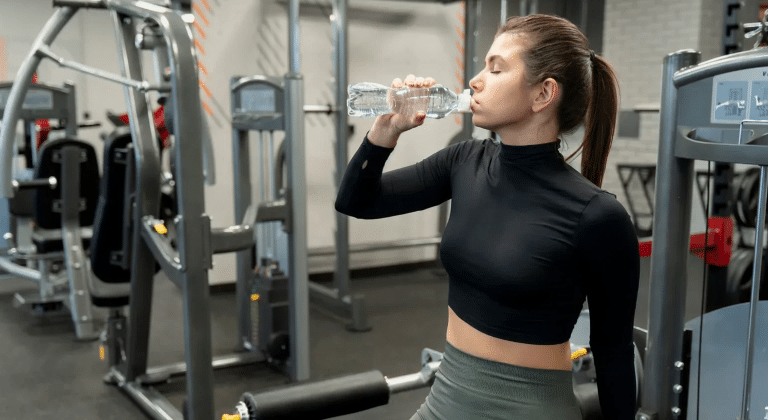
Hydration might seem basic, but it’s one of the most commonly neglected lifestyle factors. It’s also one of the easiest to fix.
Why hydration matters
Even mild dehydration (2% body weight loss) can cause:
- 10-20% decrease in strength and power output
- Impaired endurance and cardiovascular performance
- Reduced cognitive function and focus
- Increased perceived effort (workouts feel harder than they are)
- Slower recovery and increased muscle soreness
Most clients are chronically under-hydrated. They drink coffee and soda all day, then wonder why they feel terrible during workouts.
How to integrate hydration into programming
Set clear hydration targets: General recommendation: Half their body weight in ounces per day, plus extra for training.
- 180 lb client: 90 oz baseline + 16-20 oz per training session
- Adjust for climate (more in heat), activity level, and caffeine intake
Hydration is perfect for habit tracking. Set a daily goal and have clients check it off each day. Simple, measurable, and highly impactful
Use practical strategies:
- Start each day with 16 oz of water upon waking (before coffee)
- Drink 8 oz every hour throughout the day
- Have a water bottle visible at all times (out of sight = forgotten)
- Set phone reminders if needed
- Track using an app like My PT Hub
Consider telling clients to drink 16-20 oz of water 2 hours before training and another 8 oz right before the session. This ensures they start workouts properly hydrated, not already behind.
How to assess lifestyle factors in your clients

You can’t improve what you don’t measure. Here’s how to systematically assess sleep, stress, and hydration without turning every check-in into an interrogation.
Initial assessment (onboarding)
During client onboarding, include lifestyle questions alongside fitness history:

Sleep assessment:
- Average hours per night
- Sleep quality (1-10 scale)
- Bedtime and wake time consistency
- Known sleep issues (apnea, insomnia, night waking)

Stress assessment:
- Current stress level (1-10 scale)
- Main stressors (work, relationships, health, finances)
- Coping strategies currently used
- History of anxiety, burnout or stress-related health issues

Hydration assessment:
- Typical daily water intake
- Caffeine and alcohol consumption
- Hydration awareness (do they notice being thirsty?)
- Urine color (simple hydration indicator)
Creating comprehensive intake forms that assess lifestyle gives you baseline data to inform programming from day one.
Ongoing monitoring
Lifestyle factors aren’t static, they fluctuate weekly. Build lifestyle checks into your regular communication:
Weekly check-ins should ask:
- “How was your sleep this week?” (hours + quality)
- “Stress level this week?” (1-10 scale)
- “Did you hit your daily hydration goal most days?”
These quick questions take 30 seconds but provide critical context for programming adjustments.
Use subjective readiness scores:
Ask clients daily or before sessions: “On a scale of 1-10, how ready do you feel to train today?”.
Low readiness scores combined with poor sleep or high stress tell you to adjust intensity before the session even starts.
Integrating lifestyle interventions into your programming

Here’s where most coaches drop the ball: they assess lifestyle factors but never actually integrate them into the training plan. Lifestyle improvements should be programmed as intentionally as workout progression.
The tiered approach to lifestyle integration
Tier 1: Foundation (weeks 1-4) Focus on the absolute basics before adding complexity:
- Sleep: 7+ hours per night consistently
- Hydration: Hit daily water target 6/7 days
- Stress: One stress management technique practiced daily
Don’t pile on more until these basics are habits. Building sustainable habits takes time and consistency.
Tier 2: Optimization (weeks 5-12)Once basics are consistent, optimize:
- Sleep: Improve quality through better sleep hygiene
- Hydration: Fine-tune timing (especially around training)
- Stress: Add multiple stress management tools, identify triggers
Tier 3: Advanced (weeks 13+) Now you can get sophisticated:
- Sleep: Track sleep cycles, experiment with napping, adjust training based on sleep quality
- Hydration: Adjust for specific training demands, hot weather adaptations
- Stress: Proactive stress management before stressful periods, mental skills training
Making lifestyle changes stick (without overwhelming clients)

The biggest mistake coaches make with lifestyle interventions? Trying to change everything at once. Clients get overwhelmed and quit.
Start with one habit at a time
Pick the single most impactful lifestyle factor for each client and start there:
- Client getting 5 hours of sleep? Start with sleep. Nothing else matters if they can’t recover.
- Client drowning in stress? Start with stress management. They need relief before adding more.
- Client well-rested and calm but dehydrated? Start with hydration.
Master one habit for 2-4 weeks before adding another.
Make it super simple
Your lifestyle prescriptions should be as clear and specific as your training prescriptions:
Vague: “Try to sleep better.”
Specific: “Be in bed by 10:30pm every night this week. No screens after 10pm.”
Vague: “Manage your stress.”
Specific: “Do 5 rounds of box breathing (4-4-4-4) every morning after your coffee.
Vague: “Drink more water.”
Specific: “Fill your 32 oz water bottle and finish it by noon, then refill and finish by 6pm.”
Specificity eliminates ambiguity and makes compliance easier.
Tie lifestyle habits to existing routines
Help clients attach new habits to existing behaviors:
- “After you pour your morning coffee, drink 16 oz of water”
- “When you sit down at your desk, do 2 minutes of breathing”
- “Your phone alarm at 9:30pm means start your wind-down routine”
These “habit stacks” make lifestyle changes feel natural rather than like extra work.
Celebrate lifestyle wins
Don’t only celebrate training progress. Acknowledge lifestyle improvements with the same enthusiasm:
- “You hit your hydration goal 6 out of 7 days this week, that’s amazing consistency!”
- “Your sleep has improved from 5.5 hours to 7 hours consistently. This is huge for your recovery.”
- Recognition reinforces behavior. Clients need to see that you value lifestyle habits as much as gym performance.
Tracking lifestyle factors alongside training

You can’t manage what you don’t track. Lifestyle factors need the same systematic tracking as training variables.
What to track
Sleep:
- Hours per night
- Quality rating (1-10 scale)
- Bedtime and wake time
- Notes on factors affecting sleep (stress, caffeine, alcohol, screen time)
Stress:
- Daily stress rating (1-10 scale)
- Weekly stress average
- Main stressors identified
- Stress management techniques used
Hydration:
- Daily water intake (ounces or liters)
- Compliance (yes/no to hitting daily goal)
- Notes on factors affecting hydration (travel, hot weather, high training volume)
How to track efficiently
Option 1: Simple daily check-in form
Create a quick daily form clients complete:
- Sleep: [hours] | Quality: [1-10]
- Stress: [1-10]
- Hydration: [oz] | Hit goal? [Yes/No]
Takes 60 seconds to complete and gives you trend data over time.
Option 2: Habit tracking features
Use dedicated habit tracking tools where clients check off daily goals:
- ✓ 7+ hours sleep
- ✓ 80+ oz water
- ✓ 5-minute stress management
Binary tracking (Yes/No) is simple and provides clear compliance data.
Option 3: Wearable integration
Many clients use fitness wearables that automatically track sleep and stress. Integrating wearable data into your coaching platform gives you objective lifestyle data without manual tracking.
Reviewing lifestyle data
Check lifestyle data alongside training logs during client check-ins:
Create a quick daily form clients complete:
- S”Your training volume was high this week, but I see your sleep dropped to 6 hours per night. That’s likely why Thursday’s workout felt harder. Let’s prioritize getting back to 7+ hours.”
- This shows clients how lifestyle and training interact, making the connection undeniable.
What to do when clients resist lifestyle changes

Not every client will embrace lifestyle interventions. Some want to focus “just on training.” Here’s how to handle resistance.
Address the “why”
Most resistance comes from clients not understanding why lifestyle factors matter. Educate them:
“I can give you the perfect workout program, but if you’re sleeping 5 hours a night, your body physically cannot recover. We’ll be spinning our wheels. Let’s get your sleep to 7 hours, and I guarantee your results will accelerate.”
Frame lifestyle interventions as the key to unlocking better training results, not as separate obligations.
Start small
If a client resists sleep improvement, don’t ask for 8 hours immediately. Ask for 15 more minutes per night.
5.5 hours → 5.75 hours (just go to bed 15 minutes earlier)
Small wins build confidence and reduce resistance. Once they see improvement, they’ll buy in to bigger changes.
Lead with the easiest habit
Some clients will never prioritize sleep or manage stress initially. Fine. Start with hydration; it’s simple, requires no schedule changes, and shows quick results in how they feel during workouts.
Early wins with easy habits create momentum for tackling harder changes later.
Know when to back off
Sometimes clients are going through genuinely terrible life circumstances (divorce, job loss, caring for sick family). Adding lifestyle “homework” feels impossible.
In these cases, simplify everything. Maintain training at a manageable level and focus only on the one lifestyle factor that feels achievable. Don’t make fitness one more thing they’re failing at.
The bottom line on lifestyle-integrated programming
Here’s what separates good coaches from great ones: great coaches understand that training is only part of the equation.
Sleep, stress, and hydration aren’t “bonus” factors, they’re foundational. When these are optimized, clients:
- Recover faster between sessions
- Train with more intensity and focus
- See results in half the time
- Feel genuinely better (not just in the gym, but in life)
- Stick with you long-term because they actually transform
When lifestyle factors are a mess, clients plateau, get injured or quit despite “perfect” training programs.
The coaches who integrate lifestyle factors into their programming aren’t working harder, they’re working smarter. They assess sleep, stress, and hydration from day one. They prescribe lifestyle interventions as specifically as they prescribe exercises. They track lifestyle compliance alongside training compliance. And they adjust programming based on lifestyle readiness, not just what’s written in the plan.
Ready to implement lifestyle-integrated programming?
Managing training plans, nutrition AND lifestyle factors across multiple clients gets complicated fast. You need systems that make holistic coaching sustainable without drowning in admin work.
My PT Hub gives you everything you need to deliver lifestyle-integrated programming at scale: automated habit tracking for sleep, hydration, and stress management goals; comprehensive check-in forms that capture lifestyle data alongside training feedback; integration with fitness wearables for automatic sleep and activity tracking; and all your client data – workouts, nutrition, habits, and progress – in one place.
Start your 30-day free trial of My PT Hub today and discover how easy it is to integrate lifestyle factors into your programming for dramatically better client results.