
Getting certified is the first step. Finding online personal training clients? That’s where most new coaches stall.
The online fitness market is competitive, and simply setting up an Instagram account and hoping for the best is not the way to guarantee success. But here’s the good news: you don’t need a huge following, a polished website or a massive paid advertising budget to land your first clients. You need a clear offer, a consistent approach and a few of the right tactics executed well.
This guide breaks down 10 proven strategies to help you find online personal training clients and start building a sustainable coaching business from the ground up.
Contents:
- 1. Define your niche before you do anything else
- 2. Start with your existing network
- 3. Optimize your social media profiles as a point of first contact
- 4. Post content that builds trust, not just follows
- 5. Offer a free or discounted trial period
- 6. Use a referral system from day one
- 7. Build a simple one-page website
- 8. Get visible in online communities
- 9. Run a short fitness challenge to generate leads
- 10. Nail your onboarding to turn interest into retention
Define your niche before you do anything else

If you try to speak to everyone, you end up reaching no one. The first and most important step in building an online coaching business is getting specific about who you help and what result you achieve with them.
Your niche does not need to be exotic. It just needs to be specific enough that your ideal client immediately thinks, “That’s for me.” Examples include busy parents who want to get strong without spending hours in the gym, women over 40 returning to fitness after a break, or competitive runners looking to add strength training to their training plan.
Once you have your niche, build a single clear sentence around it: “I help [specific person] achieve [specific result] through [your approach].” Use this sentence everywhere: your Instagram bio, your website headline, your DMs, your first email to a lead.
A clear niche makes every other strategy on this list more effective. Your content becomes more targeted, your ads become cheaper to run, and your word-of-mouth referrals become more specific and qualified.
Related article: How to create a niche for your personal training business
Start with your existing network

Your first clients are almost certainly going to come from people who already know you. That is not a weakness in your strategy; it is just how most service businesses start.
Before spending a single dollar on ads or hours building content, reach out directly to people in your life who might benefit from what you offer, or who know someone who might. That includes former gym training partners, colleagues, family friends and anyone who has ever asked you for fitness advice.
Write a short, personal message explaining what you are doing and who you are looking to help. Rather than mass broadcasting it, consider sending individual, personalized notes. Tell them what you are offering, who it is best suited for and how they can get in touch if they or someone they know is interested.
You’re not pitching. You’re simply letting people know what you do. There is a meaningful difference in how that lands.
The goal is to get your first two or three clients from your warm network, generate early results and testimonials,= and use those to build credibility for the strategies that follow.
Optimize your social media profiles as a point of first contact
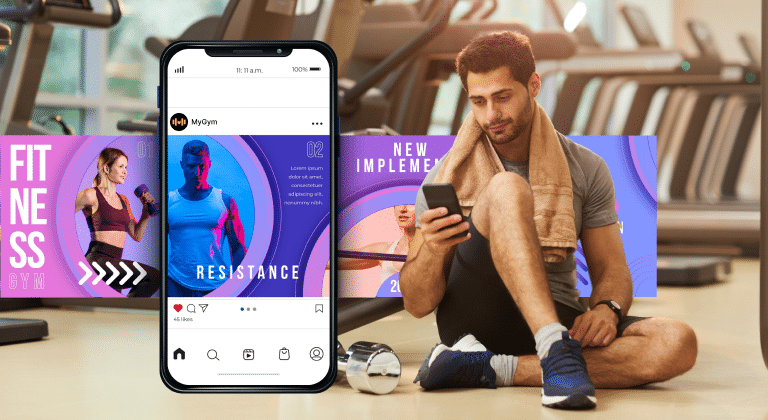
Before a potential client books a call or sends a message, they’ll almost certainly check your social media profile. In many cases, your Instagram or Facebook page is doing the work of a first impression, a sales page and a credibility check all at once.
Make it easy for people to quickly understand who you help, what you do and how to work with you. Your bio should include your niche, a line about what makes your coaching different and a clear call to action with a link to your booking page or a simple contact option.
Your profile photo should be professional and show your face clearly. Pinned posts or story highlights should showcase client results, what your coaching program looks like and answers to common questions.
The goal is that someone who has never heard of you can land on your profile, understand exactly what you offer within ten seconds, and know what to do next.
Related article: How to Write the Best Personal Training Bio
Post content that builds trust, not just follows
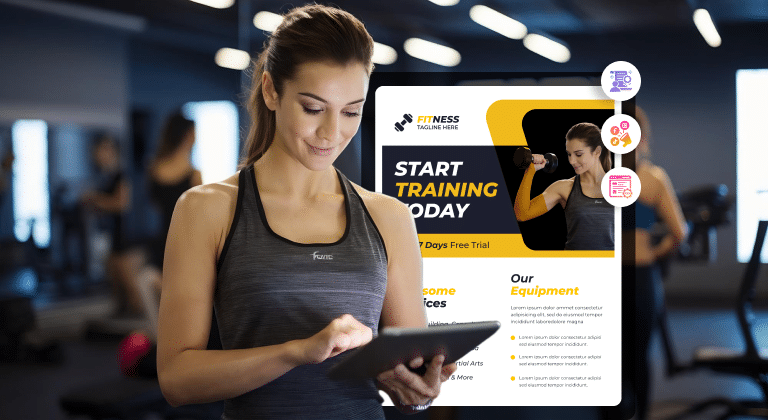
Follower count is a vanity metric when you’re starting out. What actually converts followers into paying clients is trust, and trust is built through consistent, useful content over time.
Focus your content on three categories. First, educational content that demonstrates your expertise: training tips, myth-busting, explanations of programming concepts, or nutrition guidance relevant to your niche. Second, social proof: client results, check-in updates and testimonials (with permission). Third, process content: what it looks like to work with you, how you structure programs and what a typical coaching week involves. This reduces uncertainty and makes the decision to reach out much easier for potential clients.
You don’t need to post daily. Three to four high-quality posts per week, done consistently over two to three months, will outperform daily posting that lacks focus or depth.
Related article: Personal Training Marketing: How to Drive More Clients
Offer a free or discounted trial period
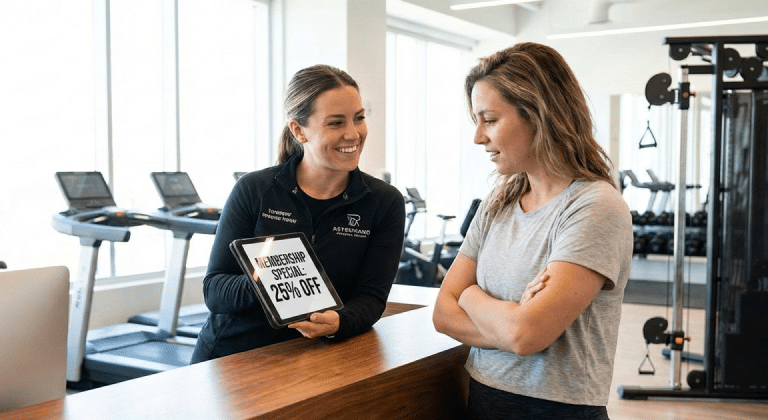
When someone has never worked with you online, they’re being asked to take a leap of faith. They’re paying for a service they cannot fully evaluate until they try it, delivered by someone they may only know from a social media profile.
Lowering the barrier to that first commitment is a proven way to get initial clients in the door. A one-to-two week free trial, a heavily discounted first month, or a free initial consultation call all serve the same purpose: they let prospective clients experience your coaching before they commit financially.
This approach works especially well when you’re new and don’t (yet) have a bank of testimonials to lean on. The trial itself becomes your proof of concept.
The critical piece is that the trial experience has to be excellent. The program needs to be personalized and well-structured. Your communication needs to be prompt and professional. The client-facing experience, the app they use, the check-in process, the ease of communication, all needs to feel like a premium service from day one.
A polished, organized onboarding experience is one of the biggest factors in converting a trial into a paying client. More on that later.
Use a referral system from day one
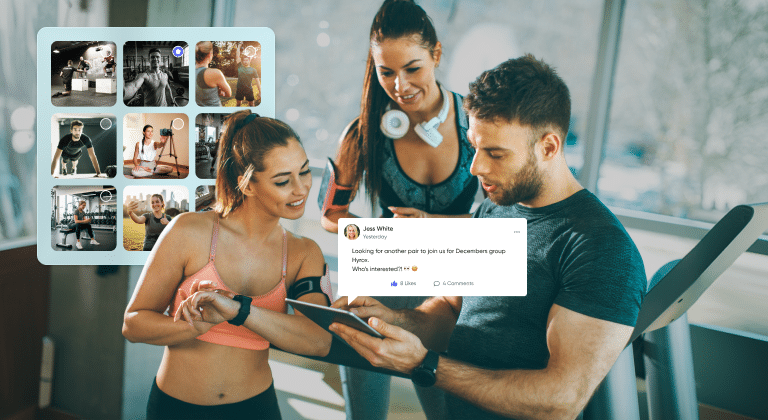
Word of mouth is the most cost-effective client acquisition channel available to a personal trainer. Most trainers acknowledge this but never actually build a formal system around it.
A simple referral program does not need to be complicated. Offer your existing clients a meaningful incentive for referring someone who signs up: a free month of coaching, a discounted renewal or an added service like a nutrition review. Make the ask easy by providing a clear, shareable link or a specific message they can forward.
Critically, don’t delay until you have a large client base to launch this. Even your first two or three clients can refer. The sooner you have a referral system in place, the sooner it starts working for you.
Time your referral requests strategically. The best moment to ask a client for a referral is right after they’ve hit a milestone, completed a challenge, or shared some positive feedback. That is when their enthusiasm is highest and the ask feels natural (rather than transactional).
Build a simple one-page website
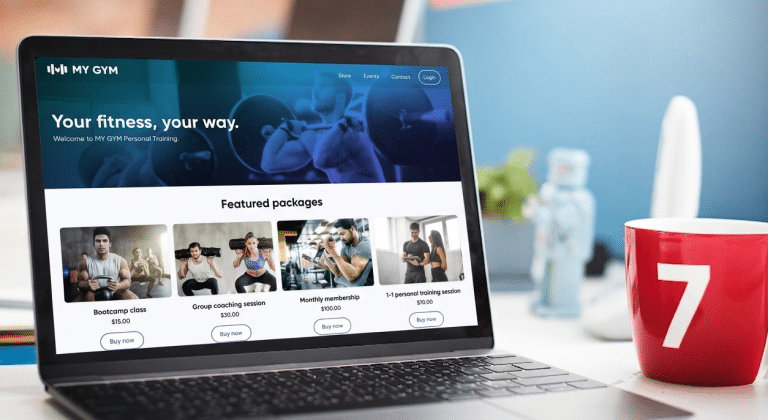
You don’t need a complex multi-page website to attract online clients. What you do need is one clean, fast-loading page that tells potential clients who you are, who you help, what your program includes, what it costs and how to get started.
Include a short bio that focuses on your expertise and the people you help (not a list of certifications). Include at least two or three client testimonials with specific results. Include a clear pricing section or a call to action to book a free consultation call.
Keep the copy simple and focused on the client, not on you. Every sentence on your website should answer the question: “What does this mean for the person reading it?”
A website also gives you a destination for every piece of content you create and every DM you send. Rather than trying to explain your program over and over in messages, you can direct people to your website and let it do the work for you.
A website also gives you a destination for every piece of content you create and every DM you send. Rather than trying to explain your program over and over in messages, you can direct people to your website and let it do the work for you.
Top tip: My PT Hub customers can create a fully branded, no-coding-required micro-website in minutes using our dedicated MySite feature, included in your My PT Hub subscription at no additional cost.
Get visible in online communities
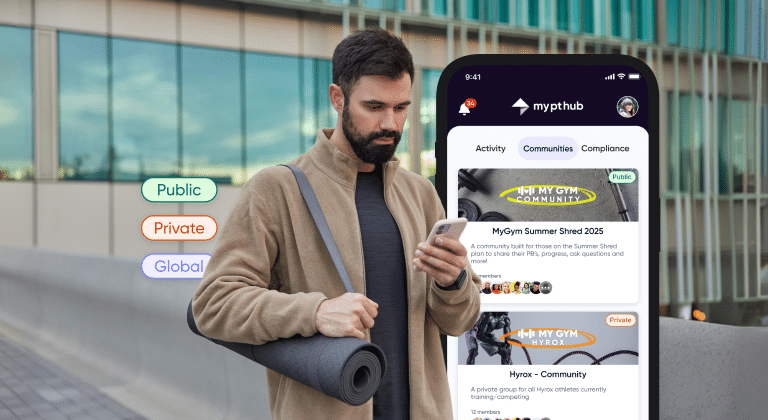
One of the fastest routes to your first clients is showing up where they already spend time online and being genuinely useful, before ever mentioning your services.
That means joining Facebook groups, Reddit communities, or forums where your target audience asks questions and discusses their goals. For a trainer focused on strength training for women, that might be a popular female lifting community. For a trainer working with endurance athletes, it could be a running subreddit or triathlon Facebook group.
The approach is straightforward: answer questions thoroughly, share useful information, and be consistently helpful over time. Don’t just spend your time pitching your services in the comments or dropping links to your website unprompted. Simply be a knowledgeable, approachable presence. People will click your profile, see what you do and reach out.
This takes longer than paid advertising, but the leads it generates tend to be highly qualified, warm and genuinely interested in working with you specifically.
Run a short fitness challenge to generate leads
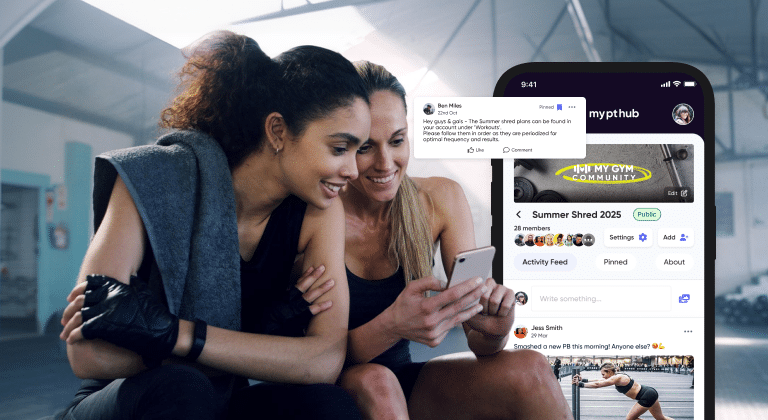
A structured fitness challenge is one of the most effective lead generation tools available to online personal trainers. It attracts people who are actively motivated to make a change, gives them a direct experience of your coaching and creates a natural conversion point at the end.
A fitness challenge doesn’t need to be elaborate. A five-day core challenge, a two-week step count program, or a 30-day movement streak can all work well depending on your niche and audience. Deliver it through a private Facebook group, an email sequence, or a client-facing app (see My PT Hub’s built-in Communities feature) and make the experience as high-quality as possible.
The end of the challenge is your conversion moment. You have a group of people who have completed a program with you, experienced your coaching style and built some momentum. Following up with a clear, time-limited offer to continue into a paid program is a logical and comfortable next step for participants who have had a good experience.
Related article: Fitness challenge ideas to inspire your clients
Nail your onboarding to turn interest into retention
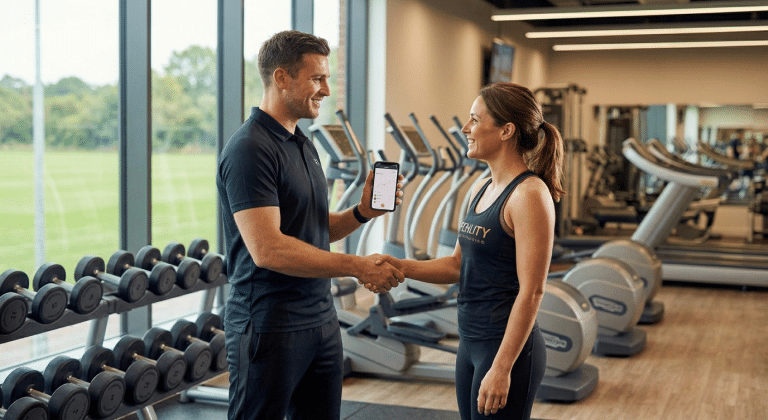
Getting a potential client to say yes is only half the job. The onboarding experience, the first week or two of working with you, is where you either cement that decision or give them reasons to leave quietly at the end of their first month.
A strong onboarding process includes a detailed intake questionnaire to understand the client’s goals, history and lifestyle. It includes a clear explanation of how your coaching works, what communication to expect and how to use your client-facing platform. It includes a genuinely personalized first program, not just a generic template with their name dropped in at the top.
The first program you deliver to a new client tells them everything about how much you value their business. If it is clearly tailored to their specific goals, health history and schedule, they feel it. If it looks like something you could have sent to anyone, they feel that too.
Speed matters here as well. Getting the onboarding materials, program and welcome message in front of a new client within 24 hours of them signing up sets a professional tone and reduces the anxiety that many new clients feel in the gap between signing up and actually starting.
Using a dedicated client management platform like My PT Hub to automate key parts of the onboarding process, such as sending intake forms, delivering programs and scheduling check-ins, means nothing falls through the cracks and every new client gets the same polished experience from day one.
Related article: Client accountability strategies: check-ins, habit tracking, progress photos — what works best and why
Ready to give your first clients the professional experience that turns them into long-term ones?
My PT Hub gives you everything you need to onboard, program, communicate with, and manage clients in one place, so you can focus on coaching instead of admin.
Start your 30-day free trial and see why over 130,000 trainers worldwide use My PT Hub to run and grow their coaching businesses.