
Word of mouth has always been one of the most powerful ways personal trainers grow their client base. When a happy client tells a friend about you, that friend arrives already trusting you; that trust converts far faster than any ad. The problem is, most trainers leave this entirely to chance. They hope a client will mention them and – while that may happen sometimes – it’s not likely to happen consistently.
A personal trainer referral program turns word-of-mouth from a happy accident into a repeatable, consistent system. It gives your clients a reason to recommend you, a clear way to do it and a tangible reward when they follow through. In this step-by-step guide, we’ll walk you through exactly how to build a personal trainer referral program that generates a steady stream of new clients.
Contents:
- 1. What a referral program actually is (and isn’t)
- 2. Why referral programs work so well in fitness
- 3. Decide what you’re offering as a reward
- 4. Choose your referral structure
- 5. Set clear terms and keep it simple
- 6. How to promote your program without being awkward about it
- 7. Tracking referrals without losing your mind
- 8. When to ask (timing really matters)
- 9. Professional referral networks: thinking beyond your client list
- 10. Common mistakes to avoid
What a personal trainer referral program actually is (and isn’t)

A personal trainer referral program is a structured system that encourages your existing clients to recommend your services to others, and it rewards them when those recommendations turn into new clients. The key word there is “structured.” It’s completely different to just hoping clients mention you to their friends.
A referral program doesn’t need to be complex. A one-page PDF, a quick message in your client app, or a simple email explaining the deal is enough to get started.
What matters is that there’s a clear process, i.e:
- 1. Here’s how to refer someone.
- 2. Here’s what you both get.
- 3. Here’s how it works.
Done right, a referral program is one of the most cost-effective client acquisition tools available to personal trainers. You’re not paying ad companies for clicks or impressions. You’re rewarding results.
Why referral programs work so well for personal trainers

Personal training is – as the name suggests – a “personal” business. Clients are trusting you with their bodies, their habits and often their self-confidence. That kind of relationship carries a lot of weight, which is exactly why a recommendation from one of your clients to their friend, partner, or coworker is so powerful.
Research consistently shows that referred customers convert at a higher rate, spend more, and stay longer than clients acquired through paid advertising. They’ve already heard good things about you, which means the sales conversation starts from a completely different place.
There’s also a retention benefit for your existing clients. When someone refers a friend and that friend joins, the original client now has a workout buddy in their corner. They’re more accountable, more likely to show up and more emotionally invested in the program. Everyone wins.
If you’re already focused on keeping clients around for the long haul, a referral program fits neatly into that strategy.
Related article: How to increase lifetime value (LTV) of personal training clients
Decide what you’re offering as a reward

This is the step most trainers either skip or overthink. You don’t need to give away the world, but the reward does need to feel genuinely worthwhile to your clients, not like an afterthought.
There are two common reward models:
Reward for the referring client. This is what your existing client gets when someone they’ve recommended signs up with you.
Options include:
- A free session
- A discount on their next package (10-20% works well)
- A free nutritional plan or body composition assessment
- A gift card to a sports retailer or supplement brand
- A month at a reduced rate
Reward for the new client. Making it easier for the referred person to say yes is just as important.
Consider offering:
- A discounted first session or introductory package
- A free assessment or goal-setting call
- A free first week of online coaching
Double-sided rewards (i.e. those that benefit both the referring client and the new client) tend to perform best. The referring client doesn’t feel like they’re just doing you a favour, and the new client has a lower-risk way to get started.
Top tip: Ask your clients what they’d actually value. A quick question during a session or a short poll through your coaching app will tell you more than guessing. Some clients will love a free session; others would much rather have a discount code. The more relevant the reward, the more likely they are to participate.
Choose your referral program structure

Once you know what you’re offering, decide how the program is set up. There are a few approaches that work well for personal trainers:
Simple per-referral reward.
For every new client who signs up as a result of a referral, the existing client gets their reward. Clean, easy to communicate and easy to manage. This is a good starting point if you’re running a referral program for the first time.
Tiered rewards.
The more referrals a client makes, the better the reward gets. For example: one referral earns a free session, three referrals earn a month at half price, five referrals earn a free month entirely. This approach gives your most enthusiastic advocates a reason to keep going.
Time-limited campaigns.
Run a referral push for a set period (e.g. six weeks) with a clear start and end date. Creating a deadline adds urgency, which nudges clients to actually act quickly.
Refer-a-friend challenges.
Turn it into a friendly competition. The client who refers the most people in a given period wins a larger prize, such as a premium gym kit, significant credit towards their membership, or a service add-on. This works particularly well if you train a community of people who know each other.
Pick whichever structure that best suits your capacity. If you’re a solo trainer already at near-full capacity, a time-limited campaign to fill one or two spots is smarter than an open-ended program that could land you with more inquiries than you can actually handle.
Set clear referral program terms and keep it simple

Ambiguity kills referral programs faster than anything else. If a client isn’t sure whether their referral counts, when they’ll get their reward or what the new client needs to do first, they’ll give up and move on.
Before you launch, nail down the following:
- What counts as a qualifying referral (e.g. the new client must purchase a specific package).
- When the reward is issued (e.g. after the new client completes their first session, or after their first invoice is paid).
- Whether the reward has an expiry date.
- How the referral is tracked.
Write this up in plain language, ideally in one short paragraph or a simple bullet list. If you’re explaining the terms and it takes more than 30 seconds for a client to understand, simplify it further.
How to promote your referral program without being awkward about it

Personal trainers often feel uncomfortable asking clients for referrals. It can feel like asking for a favour, or worse, like you’re admitting you need clients (even if that’s true). Reframing this helps: you’re not asking for a favour, you’re offering a perk to people who are already fans of your work.
Here’s how to get the word out naturally:
In your welcome process.
Include details about your referral program in your onboarding materials. When a client joins and is most excited about starting, they’re already likely thinking about who else might benefit. Capture that energy early.
Email and messaging.
Send a dedicated email to your current client list when you launch the program. Keep it short, explain what’s in it for them, and make it easy to act on immediately. If you use a personal training app like My PT Hub, send an in-app message too.
Social media.
A post about your referral program, framed around the reward rather than your need for clients, works well on Instagram, Facebook and other social channels. Highlight the benefit: “Know someone who’s been wanting to start training? Send them my way and you’ll both get something out of it.”
In-session conversations.
The best time to mention your referral program is when a client is already feeling great; like after a strong session, when they’ve hit a personal best or when they tell you they’ve noticed a difference. That moment of positivity is when they’re most inclined to share. A simple, “By the way, if you know anyone who’d be a good fit for what we do, I’ve got a referral offer running at the moment” is all you need.
Related article: Personal Training Marketing: How to Drive More Clients
How to track your referrals

If you’re running a referral program without tracking it properly, you’ll end up with a frustrated client who referred three people and never received their reward, and a new client who was promised a discount that somehow got lost in translation. Neither is a great look.
At minimum, you need to know:
- Who referred whom
- Whether the referred person has signed up and met the qualifying criteria
- Whether the reward has been issued
For a small client base, a simple spreadsheet works fine. Create columns for: referring client, referred contact, date of referral, status (signed up / not yet), and reward issued (yes / no). Check it weekly.
For a more streamlined approach, use your personal training software to manage this. For example, My PT Hub’s Voucher feature allows you to create and track discount codes that clients can redeem on your packages; you can track redemptions of a single code easily, or create unique referral codes for each client (e.g. ADAMP20).
Related article: Personal trainer KPIs: Metrics you should track monthly
When to ask for referrals (timing really matters)
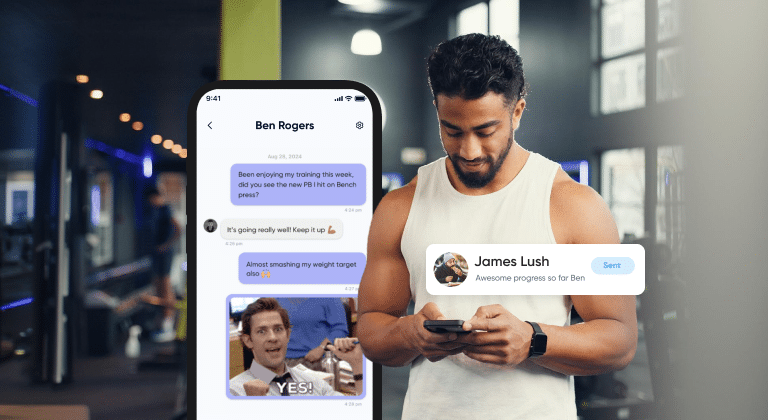
The single most underrated aspect of a referral program isn’t the incentive or the structure. It’s the timing of when you bring it up.
Asking a client for a referral when they’re mid-program and haven’t seen results yet is a tough sell. Asking when they’ve just hit a milestone, received a compliment on their progress, or told you that training has genuinely changed something for them? That’s a very different conversation.
Build trigger points into your coaching process. When a client hits a goal or a meaningful milestone, congratulate them first, then mention your referral program. This doesn’t need to feel scripted. Something like, “I’m really pleased with your progress over the last couple of months. If you know anyone who’s been wanting to get started, I’m taking on new clients and I’ve got a referral offer running that will save you and your friends 20% off your next program”.
If you’re a My PT Hub customer, you can also set up automated milestone messages based on milestones to make this process even easier, directly from your app. A message that goes out when a client completes their 3rd purchase, or when they log their 20th session, is a natural moment to include a gentle referral prompt.
Professional referral networks: thinking beyond your client list

Your clients aren’t the only referral source worth cultivating. Other professionals who work with the same people you do are an often-overlooked pipeline for new clients.
Physiotherapists, osteopaths, chiropractors and sports massage therapists regularly see people who’ve been told they need to get stronger, lose weight or rehabilitate an injury. Building a genuine relationship with local practitioners in these fields can generate a steady stream of referred clients.
The same applies to GPs, dietitians and mental health professionals, particularly if you work with populations managing chronic conditions, weight-related health issues, or stress and anxiety through exercise.
This type of network referral is less about incentives and more about trust and reputation. Introduce yourself, be clear about who you help and how, and follow up on any clients they refer with professional updates on progress (with the client’s consent, of course). Treat it like a professional relationship, not a transactional exchange.
If you’re building a niche in a specific area of fitness, a professional referral network becomes even more valuable, and even more targeted.
Related article: 6 Reasons personal training niches generate more revenue
Common referral program mistakes to avoid

Even a well-intentioned referral program can fall flat if a few common pitfalls aren’t avoided.
Making it too complicated.
If your clients have to read three paragraphs to understand how the program works, most of them won’t bother. One clear benefit, one clear action, one clear reward.
Forgetting to follow up.
Launching a referral program and then never mentioning it again is the most common mistake. Include it in your regular client communications, bring it up at relevant moments in sessions and revisit it periodically.
Rewarding too slowly.
If a client refers someone and waits three months for their free session, the positive association has completely worn off. Issue rewards promptly, ideally within a week or two of the qualifying event.
Not saying thank you.
Beyond the formal reward, a personal thank-you goes a long way. If a client refers a friend to you, acknowledge it directly and sincerely. It reinforces the behaviour and strengthens the relationship.
Running it before you’re ready.
A referral program is only as good as the service behind it. If you’re already struggling with client communication, session quality, or follow-up, focus on those first. Referrals bring in more clients, but a bad experience spreads just as fast as a good one.
Start building your personal trainer referral program today
A well-structured personal trainer referral program doesn’t need to be elaborate to be effective. Start simple: pick a reward, choose a structure, tell your clients about it and track what happens. Adjust as you go.
If you’re looking for a platform to help you manage your client communications, track new client sources, issue discounts and vouchers and keep your entire business running in one place, My PT Hub is built exactly for that.
Start your 30-day free trial today and see how much easier growing your business can be.