
Client lifetime value isn’t just another fancy business buzzword. It’s the difference between constantly hustling for new clients and building a sustainable fitness business that grows predictably. Understanding and increasing lifetime value (LTV) means each client generates more revenue over a longer relationship, allowing you to invest more in acquisition, deliver better service, and actually enjoy running your business instead of perpetually scrambling to replace churning clients.
Most personal trainers focus exclusively on getting new clients, treating their business like a leaky bucket that needs constant refilling. The trainers building six-figure businesses? They’ve mastered LTV optimization. We’ll explore how to join them in the following article.
Contents:
- 1. Understanding what LTV actually measures
- 2. Increasing average revenue per client
- 3. Extending client relationships through strategic programming
- 4. Creating a world-class onboarding experience
- 5. Implementing proactive communication systems
- 6. Offering tiered services and natural upsells
- 7. Building genuine community among clients
- 8. Using data to identify and fix churn risks early
- 9. Celebrating progress to maintain motivation
- 10. Leveraging technology to scale personalization
1. Understanding what LTV actually measures

Lifetime value calculates the total revenue you’ll earn from a client during their entire relationship with you. It’s calculated as (average monthly revenue per client) x (average months retained). A client paying $400 monthly for 24 months has an LTV of $9,600.
This number matters because it determines how much you can afford to spend acquiring clients. If your LTV is $10,000 and you have a Cost of Acquisition (CAC) of $500, you have excellent margins. If LTV is $1,500 and acquisition costs $500, you’re barely profitable. Two levers control LTV:
- How much clients pay (average revenue per member)
- How long they stay (length of engagement).
Increase either number and you increase LTV. Increase both and you multiply results.
Most trainers instinctively focus on getting more clients rather than maximizing value from existing ones. However, this is a backwards way of thinking about things. Retention costs far less than acquisition, existing clients already trust you and loyal clients refer more business than anyone else.
Track your current LTV before implementing changes. You need a baseline to measure improvement. Calculate average monthly revenue across all clients, then average retention length. This gives you a starting point for optimization efforts.
2. Increasing average revenue per client

Higher monthly revenue directly increases LTV without requiring clients to stay longer. The key is providing more value, not just charging more arbitrarily.
Bundle services as a bolt-on,
like adding nutrition coaching to training packages. Bundle services together at a package rate higher than training alone but lower than purchasing separately. This increases perceived and actual value.
Introduce premium tiers
beyond basic training. Offer packages with more frequent check-ins, advanced programming, or exclusive access to your time. Not everyone will upgrade, but those who value premium service will pay significantly more.
Implement small regular increases for long-term clients.
Grandfather existing rates temporarily but raise new client pricing annually based on experience gained and demand. Long-term clients on old rates can be offered upgraded services to justify rate increases.
Sell supplementary products
aligned with your services. Recovery tools, supplements you genuinely recommend or program templates for travel all add revenue without requiring more of your time. These purchases increase average revenue per client with minimal additional effort.
The goal isn’t squeezing maximum dollars from every client. It’s ensuring your pricing reflects the value you deliver while offering options for clients wanting enhanced service levels.
3. Extending client relationships through strategic programming

Keeping clients engaged longer dramatically increases LTV. The difference between 12-month and 24-month average retention doubles lifetime value at the same monthly rate.
Build programmatic variety into long-term training.
Clients leave when bored or feeling stuck. Structure programs in 6 to 8 week blocks with distinct focuses: strength, power, endurance, mobility. This creates natural progression and renewed interest every few months.
Set progressive goals beyond initial objectives.
Once a client achieves their original goal (lose 20 pounds, run a 5K), immediately establish the next target. Without forward momentum, clients drift away; emphasize that fitness is a continuous journey, with each milestone revealing new possibilities.
Introduce new challenges regularly to maintain engagement.
Fitness challenges, skill development projects or personal record attempts keep training fresh. Monotony kills retention faster than almost anything else.
Create programs that acknowledge life seasons.
Clients don’t quit because they stop valuing fitness. They quit because rigid programs don’t adapt to changing life circumstances. Offer maintenance phases during busy work periods or program modifications during injury recovery.
The longer clients train with you, the more valuable the relationship becomes to both parties. Your investment in understanding their unique needs deepens, and their results compound over time.
Related article: How to retain personal training clients.
4. Creating a world-class onboarding experience

First impressions determine whether clients become long-term relationships or churn within months. Exceptional onboarding significantly increases LTV.
Conduct thorough initial assessments
Covering goals, history, preferences, fears and lifestyle factors. Understanding clients deeply from day one allows you to deliver personalized experiences that keep them engaged.
Set realistic expectations early.
Clients who believe they’ll transform in 30 days quit when that doesn’t happen. Those with realistic timelines stick around to achieve actual results. Honesty during onboarding creates staying power.
Deliver quick wins in the first two weeks.
These don’t need to be physical transformations. Better sleep, reduced soreness, improved energy or mastering a new movement count as wins that build confidence and commitment.
Establish communication patterns immediately.
If you’ll check in weekly, start immediately. If clients should report workouts daily, set that expectation from session one. Consistent communication prevents clients from feeling ignored and drifting away.
Strong onboarding significantly extends average client lifespan because it builds trust, sets appropriate expectations, and creates early positive experiences that carry momentum forward.
Related article: How to Improve Your Personal Trainer Client Onboarding
5. Implementing proactive communication systems

Consistent communication maintains relationships and catches problems before clients disappear. Proactive systems dramatically reduce silent attrition.
Schedule regular check-ins at predictable intervals.
Weekly quick pulses, monthly deep dives and quarterly progress reviews create touchpoints that keep you connected. Clients feel supported between sessions and stay accountable.
Use automated reminders for key milestones.
Birthday messages, training anniversaries, or goal achievement celebrations take minutes to set up and make clients feel valued. Small gestures compound over time.
Monitor engagement patterns and intervene early.
If a typically consistent client misses two sessions, reach out immediately. Don’t wait for them to ghost. Early intervention saves relationships that would otherwise end silently.
Provide value outside paid sessions.
Share relevant articles, quick form tips via video or motivational messages that show you’re thinking about their success beyond billing them. This builds relationships deeper than transactional exchanges
Communication systems scale personalization.
You can’t personally think about every client daily, but systems ensure no one falls through cracks. This maintains relationship quality as your business grows.
Related article: 8 Essential Client Check-In Questions (And How to Use Them Effectively)
6. Offering tiered services and natural upsells

Multiple service levels allow clients to increase spending as their commitment and budget allow, boosting LTV without losing clients who can’t afford premium pricing.
Create package tiers with clear value differentiation.
Basic might be programming and monthly check-ins. Mid-tier adds nutrition guidance. Premium includes weekly video reviews and unlimited messaging. Clients choose their level and can upgrade as needs evolve.
Introduce complementary services naturally.
If a client struggles with nutrition, offer meal planning. If they mention wanting to run a 5K, create a specialized program. Upsells that solve actual problems feel helpful, not sales-y.
Offer intensive short-term programs for specific goals.
A 6-week strength focus or 8-week competition prep can supplement ongoing training and significantly boost revenue during the program period without requiring permanent commitment.
Bundle services at package pricing.
Three months of training plus nutrition coaching should cost less than purchasing separately but more than training alone. This encourages clients to buy more (while feeling they’re getting an amazing deal!).
The goal is creating natural opportunities for clients to invest more as they see value and achieve results, not pushing services they don’t need.
Related article: How to upsell personal training services (without feeling pushy!)
7. Building genuine community among clients
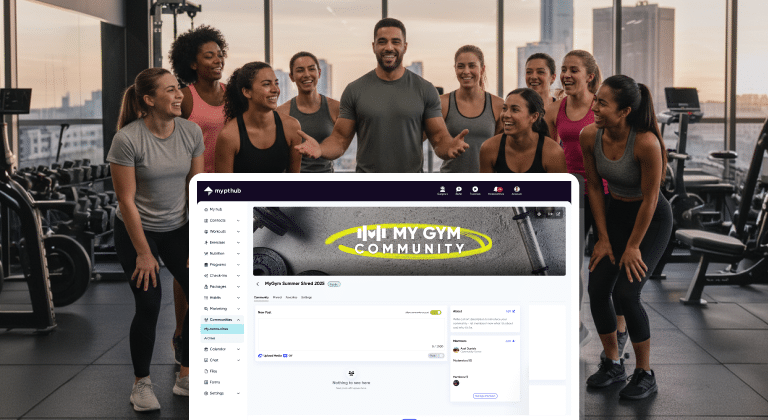
Clients embedded in a community are much less likely to leave. The relationships and accountability become valuable beyond just the training, dramatically extending LTV
Create group chat channels or private Facebook groups where clients connect
They’ll share wins, ask questions and support each other. This peer accountability keeps people engaged when individual motivation wanes.
Host regular social events beyond training.
Group workouts, nutrition workshops or social gatherings build relationships among clients. People stay because of friends, not just programming.
Celebrate client wins publicly (with permission).
Sharing transformation stories, PR celebrations, or milestone achievements in group settings creates collective momentum. Everyone wants to be next.
Facilitate connections between similar clients.
Introduce the new mom to other parent clients, connect people training for the same event or pair experienced clients with beginners. Intentional relationship-building creates a thriving community.
Community transforms your business from a service provider into a tribe. Clients don’t leave tribes easily because they’d lose something irreplaceable.
Related article: How to build a community around your personal training business: The complete guide
8. Using data to identify and fix churn risks early

Proactive retention requires identifying at-risk clients before they quit. Data reveals warning signs invisible to intuition alone.
Track session attendance rates.
Clients dropping from 3 sessions weekly to 1 are at high churn risk. Declining consistency predicts departure. Reach out when patterns shift.
Monitor engagement with programming.
If clients stop logging workouts or responding to check-ins, they’re mentally checking out. Early intervention while they’re still somewhat engaged is crucial.
Notice life event mentions.
New job stress, family illness, or relationship changes impact training consistency. Acknowledge these challenges and adapt programs accordingly rather than ignoring reality.
Survey client satisfaction quarterly.
Brief check-ins asking what’s working and what needs improvement reveal problems you might miss. Clients appreciate being asked and often reengage when heard.
Data-driven retention catches problems while they’re fixable. By the time clients voice dissatisfaction or cancel, it’s often too late to save the relationship.
9. Celebrating progress to maintain motivation

Visible progress keeps clients engaged. When people see results, they keep investing. When progress stalls or goes unnoticed, they quit.
Document starting points comprehensively.
Photos, measurements, performance baselines and subjective assessments create comparison points that reveal progress clients might not notice day-to-day.
Review progress explicitly every 4 to 6 weeks.
Don’t assume clients recognize their improvements. Show them objective data proving they’re stronger, more consistent or moving better. Seeing progress maintains motivation.
Celebrate non-scale victories prominently.
Weight is one metric. Energy levels, sleep quality, mood improvements, reduced pain or performance achievements matter more to many clients. Acknowledge what matters to them individually.
Create visual progress representations.
Graphs showing strength increases or consistency streaks make improvements tangible. People stay engaged when they see upward trajectories.
Regular progress celebration proves value and justifies continued investment. Clients who clearly see results rarely cancel.
10. Leveraging technology to scale personalization

Technology allows you to provide individualized attention to more clients without burning out, maintaining the relationship quality that drives high LTV.
Use a personal training software like My PT Hub that tracks everything in one place. When you can instantly see a client’s full history including workouts completed, check-in responses and progress photos, you deliver a more personalized service in much less time.
Automate routine communications while personalizing important ones. Schedule reminders, milestone celebrations, and check-in prompts automatically. Reserve your personal attention for meaningful interactions that build relationships.
Enable client self-service for routine needs. Let clients reschedule sessions, view programs or log progress independently. This frees your time for high-value activities while maintaining client satisfaction through convenience.
Integrate data from wearables and apps to understand clients more fully. Sleep quality, daily activity and recovery metrics inform programming decisions and show clients you’re paying attention to their complete picture.
Technology doesn’t replace relationships. It enables you to maintain relationship quality with more clients by handling administrative burden and organizing information that makes personalization possible at scale.
Building a business on client value, not volume
Increasing LTV transforms your business model from constant client acquisition to sustainable growth.
Invest in retention as actively as acquisition. Most trainers spend 80% of effort on getting new clients and 20% on keeping them. Reverse this ratio for dramatically better business economics.
Remember that LTV improvements create compounding benefits. Higher LTV allows higher acquisition spending, which attracts better-fit clients, who stay longer, further increasing LTV. Success spirals upward.
Streamline your retention efforts
Increasing client lifetime value requires systems that support consistent communication, personalized programming and data-driven intervention. Manual tracking of all these elements quickly becomes overwhelming as your client base grows.
My PT Hub provides the tools personal trainers need to deliver high-LTV client experiences at scale. Automated check-ins, progress tracking, program management and client communication tools ensure no one falls through the cracks while freeing your time for genuine relationship building that keeps clients engaged.
Ready to build a business focused on client value rather than constant volume?
Start your 30-day free trial of My PT Hub today and implement the retention systems that drive sustainable growth through increased lifetime value.